
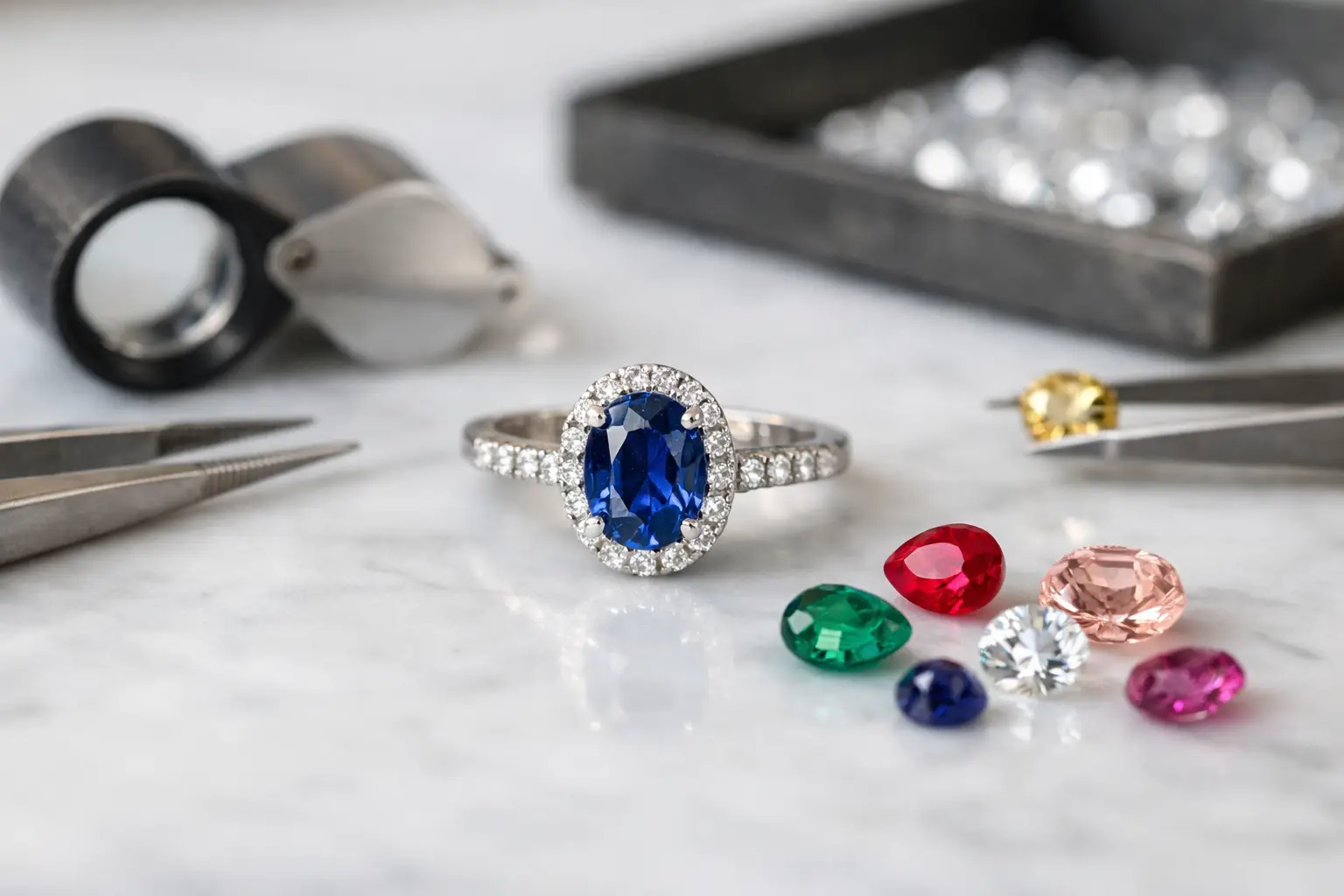
A custom gemstone engagement ring begins with a choice most diamond rings cannot offer: the chance to select a stone whose color, origin, and character feel entirely personal. A sapphire may recall the ocean near a favorite holiday destination. A soft pink spinel may feel understated and unexpected. A vivid Sri Lankan yellow sapphire can bring warmth to a design that will be worn every day.
The most memorable rings are not made by following a trend. They are built around the right balance of beauty, practicality, and meaning. That balance looks different for every couple, which is exactly why a custom approach matters.
Start With the Gemstone, Not the Setting
In a custom design, the gemstone should lead the conversation. Its shape, proportions, color, and light performance will influence everything from the width of the band to the height of the setting.
Natural gemstones are individual. Two blue sapphires of the same carat weight can look completely different: one may be an inky midnight blue, another a luminous cornflower blue, and another may show green or violet undertones. These nuances are not flaws to be corrected. They are the reason a natural stone has a presence of its own.
For many engagement rings, sapphire is an exceptional starting point. Corundum, the mineral family that includes sapphires and rubies, is highly durable for regular wear. Blue sapphire remains a classic choice, but yellow, pink, teal, green, white, and bi-color sapphires offer a broader and more personal palette. A rare padparadscha sapphire, with its delicate balance of pink and orange, has a character that is difficult to imitate and instantly recognizable once seen.
Other gemstones can make beautiful engagement stones, though the setting and lifestyle should be considered more carefully. Spinel offers lively brilliance and very good durability. Garnet, zircon, and tourmaline each bring distinctive color possibilities, but generally need more protection from knocks and abrasion than sapphire. There is no single best stone. There is only the stone that suits the wearer and the way the ring will be lived in.
Color Is More Than a Shade Name
When selecting a gemstone, color is often the first quality people notice, but it is worth looking beyond labels such as “blue” or “pink.” Consider hue, tone, and saturation. Hue is the basic color. Tone describes how light or dark it appears. Saturation refers to the strength or purity of that color.
A deeply saturated sapphire may feel dramatic, while a lighter stone can appear more open and luminous. Neither is automatically more valuable or more beautiful. The most successful choice is usually one that remains appealing in different light, from daylight near a window to evening restaurant lighting.
Sri Lanka has long been known for gemstones with remarkable brightness and a broad spectrum of color. Natural Ceylon sapphires are especially admired for their lively appearance, often showing a softness and light return that suits fine jewelry beautifully. Looking at a stone in person, where possible, is invaluable. If viewing remotely, clear images and video in varied lighting, along with direct guidance from a gemstone specialist, can help you understand its true character.
Ask About Natural Origin and Treatment
A fine gemstone should come with an honest account of what it is and how it reached its present appearance. Natural origin, treatment status, country of origin when known, and any laboratory documentation are all relevant parts of that story.
Most sapphires on the market have been heated. Heating is an accepted and common treatment that can improve color and clarity, but it should always be disclosed. Unheated sapphires are rarer because they display their beauty without heat treatment, and this rarity can have a meaningful effect on value. An unheated stone is not automatically the right choice for every budget or design, but it is worth understanding the distinction before deciding.
There are also treatments that require more caution, including fracture filling, diffusion, and coatings. These can affect durability, long-term care, and value. A trusted specialist will explain such details plainly rather than allowing a beautiful photograph to carry the entire decision.
At Ceyloe, the relationship with Sri Lankan gemstone heritage and family-owned mining connections makes provenance more than a line on a certificate. It is part of the confidence that comes from knowing the gemstone has been selected with care and represented transparently.
Design for Daily Life
An engagement ring should be beautiful at a candlelit dinner, but it must also work while opening doors, carrying bags, gardening, or navigating a busy week. The setting is where the romance of the gemstone meets the realities of daily wear.
A low-set design is often a sensible choice for someone with an active lifestyle or a hands-on profession. It keeps the gemstone closer to the finger and can reduce the chance of catching it on fabric or hard surfaces. A bezel setting, which surrounds all or part of the stone with metal, provides excellent protection and a clean contemporary profile. Prong settings allow more light into the gemstone and can create a lighter, more traditional look, although the prongs should be checked periodically.
The shape of the gemstone also affects durability in the finished ring. Round and oval stones have no sharp corners and are naturally more forgiving. Pear, marquise, and emerald-cut stones can be striking, but their points or corners may benefit from protective prongs or a bezel. This is especially relevant for gemstones that are softer than sapphire.
Metal choice changes both the appearance and practical character of the ring. Platinum is dense, naturally white, and well suited to fine settings, though it has a higher cost. White gold offers a crisp look and is a popular choice, while yellow gold can deepen the warmth of yellow, peach, green, or teal stones. Rose gold can be lovely with pink sapphires and spinels, but its warm tone may not suit every gemstone color. Viewing metal samples beside the chosen stone is a small step that can prevent a costly mismatch.
Let Proportion Create Presence
Carat weight matters, but it does not tell the full story. Gemstones vary in density and cutting style, so two stones with the same carat weight may face up at very different sizes. A well-proportioned oval sapphire can look beautifully substantial without needing an extreme carat weight, while a deeper-cut stone may carry more weight below the surface.
Focus on millimeter dimensions, finger coverage, and how the stone sits on the hand. A ring that looks ideal in a product image may feel quite different on a smaller or larger finger. This is where custom design offers a real advantage: the band width, side stones, and setting height can all be adjusted around the center gem rather than forcing the stone into a predetermined mold.
Side stones should support, not compete with, the center gemstone. White diamonds provide contrast and sparkle, while tapered baguettes can bring a tailored, architectural finish. Sapphires in tonal shades create a softer, more individual look. For a truly personal design, a plain band may be the strongest choice of all, allowing an exceptional natural gemstone to remain the focus.
Set a Budget Around What Matters Most
Custom does not have to mean extravagant, but it does require clear priorities. Decide early whether your budget is primarily for rarity, size, color, an unheated stone, a more elaborate setting, or a particular origin. Usually, one or two of these priorities will matter most.
If luminous color is the goal, choosing a slightly smaller gemstone with strong saturation and life can be more rewarding than selecting a larger stone that appears dark or dull. If the story of an unheated Ceylon sapphire is central, the design may be kept elegantly simple to give the stone room within the budget. There is no compromise in making a thoughtful choice. A well-chosen ring is one in which every element feels intentional.
Give the Process Time
A custom ring is not an impulse purchase, and that is part of its value. Allow time to compare gemstones, refine the design, confirm ring size, and consider how a wedding band may sit alongside it. If a straight band is important, mention this at the design stage. A low-set ring may require a contoured wedding band, while a raised setting can allow a straight band to sit flush.
Keep a record of the gemstone’s details, treatment disclosure, and any laboratory report. These documents are useful for insurance, future valuation, and simply preserving the story of the ring. Fine jewelry becomes more meaningful when its provenance is retained with the same care as the piece itself.
The right gemstone will often make the decision feel quieter, not more complicated. When its color continues to draw your eye, its details are clearly understood, and its setting suits the life ahead, you have the beginnings of an heirloom with a story worth wearing.
