
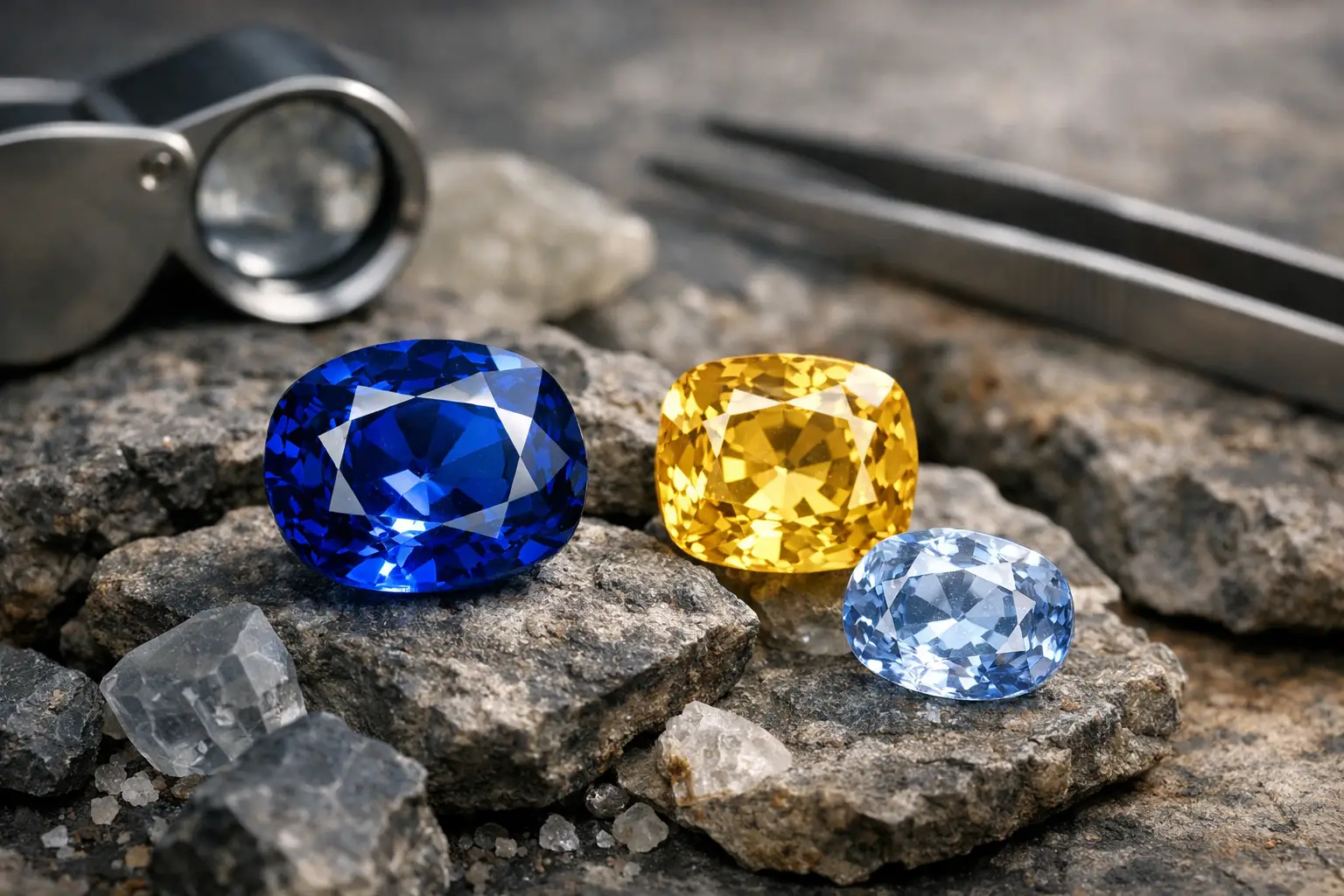
A sapphire can look intensely blue, softly golden, or delicately pink without ever having been placed in a furnace. That is the quiet appeal of natural unheated sapphires: their color, inclusions, and character were formed by the earth, then revealed through cutting rather than materially changed by heat.
For many clients, that distinction turns a beautiful gemstone into a particularly meaningful one. An unheated sapphire carries a closer connection to its geological origin, and in fine examples, that rarity can make it highly sought after by collectors and couples choosing an heirloom engagement stone. Yet unheated is not automatically better in every circumstance. Understanding what it means, how it is verified, and where it sits among the many factors that determine quality will help you choose with confidence.
What does “natural unheated” actually mean?
The word “natural” confirms that a sapphire formed in the earth rather than being grown in a laboratory. It does not, by itself, tell you whether the stone has been treated after mining. Sapphires have been heated for centuries, usually to improve color, reduce the visibility of certain inclusions, or enhance clarity. Heat treatment is an established and widely accepted practice in the gem trade.
An unheated sapphire has no evidence of heat treatment when examined by a qualified gem laboratory. Its appearance is therefore substantially the result of nature. This matters because fine color and transparency are far less common without treatment, particularly in larger stones.
There is a useful nuance here. Gem laboratories assess a stone for features that indicate heating. A report may state that there are no indications of heat treatment, while some report wording may refer to heat only, or to a broader range of treatment findings. The exact language matters. A trusted seller should explain it plainly and provide the relevant laboratory documentation for a significant purchase.
Unheated does not mean untouched by human hands. The rough crystal must still be cut and polished. Skilled cutting is essential to show a sapphire at its best, balancing color, brightness, shape, and carat weight. The distinction is that cutting reveals the gemstone’s existing beauty, while heating can alter its internal condition and visual appearance.
Why natural unheated sapphires are so rare
Sapphire is a variety of corundum, a durable mineral capable of appearing in almost every color. Blue sapphires are the best known, but Sri Lanka is celebrated for an exceptional spectrum that includes yellow, pink, teal, green, white, bi-colour, and padparadscha sapphires.
Only a small proportion of mined sapphire rough combines attractive natural color, sufficient clarity, and a size that will yield a fine finished gem without treatment. The odds become narrower when a buyer is looking for a pleasing face-up color, good brilliance, balanced proportions, and an independent report confirming no heat.
That scarcity is especially apparent in stones with a luminous, open color rather than an overly dark or grey appearance. A fine unheated blue Ceylon sapphire may show a clear, lively blue that shifts gently between daylight and indoor light. Fine unheated yellow sapphires can have an elegant lemon, golden, or honeyed tone. Pink and padparadscha sapphires require even more careful judgment, as the balance of hue is central to their appeal and value.
Sri Lanka’s gemstone deposits have supplied the world with sapphires for centuries. The island’s alluvial gem gravels are known for producing crystals with attractive transparency and a distinctive light-filled quality. Origin is not a guarantee of quality, but a documented Sri Lankan origin can add significance where color, clarity, cutting, and treatment status are already strong.
Color comes first, but it is not the whole story
When viewing an unheated sapphire, color is usually the first quality you notice and often the largest influence on value. The most desirable color is not necessarily the darkest or most saturated one. A stone should have life.
Look for a pleasing hue, enough saturation to feel expressive, and a tone that remains bright rather than inky. Some sapphires show a subtle color shift in different lighting, which can be part of their individual charm. Others may have zoning, where color is unevenly distributed within the crystal. Fine cutting can minimize zoning from the face-up view, although it cannot remove it entirely.
Clarity should be considered with the same measured approach. Natural sapphires commonly contain inclusions, and an unheated stone may show more internal features than a heated one. These can be tiny mineral crystals, delicate needle-like rutile, or fingerprint-like healed fractures. Inclusions are not automatically flaws. They are often part of the evidence a laboratory uses to assess natural origin and treatment status.
What matters is whether inclusions affect the stone’s beauty or durability. A transparent sapphire with minor, non-distracting inclusions can be far more compelling than a sterile-looking gem with weak color. Conversely, fractures that reach the surface or inclusions that make a stone appear hazy deserve careful consideration, especially for a ring worn every day.
Cut is the quality that brings color and clarity together. A well-cut sapphire returns light evenly across the crown, avoiding a prominent dark area in the center known as extinction or a pale, see-through window. It is worth viewing videos and photographs under more than one lighting condition, or examining the gem in person where possible. The most accurate impression comes from seeing how it performs in ordinary life, not only under showroom lights.
How treatment status should affect value
Unheated status can command a premium, but it should not be treated as a shortcut to value. A poorly cut, heavily included unheated sapphire is not necessarily more desirable than a beautifully cut heated sapphire with excellent color and brightness. Both can be natural gemstones. Both can be suitable for a special piece of jewelry.
The premium becomes most meaningful when unheated status is paired with superior overall quality. In a fine sapphire, the combination of desirable color, appealing clarity, strong cutting, larger size, recognized origin, and laboratory confirmation can be unusually scarce. This is where collector interest tends to be strongest.
For an engagement ring, personal preference often matters more than a single category. A client might choose an unheated pale blue Sri Lankan sapphire for its softness and provenance, even if it is not the most commercially valuable shade. Another may prefer a heated vivid blue sapphire because it offers a stronger color within a particular budget. Neither decision is less considered when it is made with clear information.
Certification and provenance deserve careful attention
For a valuable unheated sapphire, an independent laboratory report is an essential part of the conversation. It should identify the stone as natural corundum, state whether heating is indicated, and, when determined, provide an opinion on geographic origin. Reports vary between laboratories, so read the wording rather than relying only on a label or verbal assurance.
Ask to see the report that relates to the exact gemstone you are considering. Check the report number, carat weight, measurements, shape, and any identifying features against the stone. If a sapphire is being sold as unheated but no report is available, factor that uncertainty into the purchase decision and price.
Provenance is also broader than a laboratory opinion. It includes the care taken in sourcing, selecting, documenting, and presenting a gemstone. At Ceyloe, close ties to Sri Lankan gemstone heritage and family-owned mining networks allow us to select natural stones with a clearer sense of their journey. For clients, this can make the experience more personal while keeping the focus where it belongs: on the gemstone itself and the facts that support it.
Choosing a sapphire you will still love years from now
Start with the color that draws you in, then assess the stone’s performance rather than comparing it only against an idealized image. View it in daylight if possible. Notice whether it holds your attention at arm’s length. Consider its proportions, inclusions, treatment status, and report as parts of one whole.
For jewelry that will be worn frequently, think about setting as well as beauty. Sapphire is exceptionally durable, ranking nine on the Mohs scale, but sharp corners and exposed edges can still be vulnerable to impact. A bezel, halo, or carefully designed claw setting may offer additional protection for certain shapes. A custom setting can also be designed around a gemstone’s individual dimensions rather than forcing it into a standard mount.
A fine unheated sapphire does not need to be perfect to be remarkable. Often, the most memorable stones have a particular hue, a gentle glow, or a traceable Sri Lankan story that makes them impossible to confuse with anything mass-produced. Choose the one that feels honest in its beauty and clear in its documentation, and it can become a lasting part of your own story.
Comments (5)