
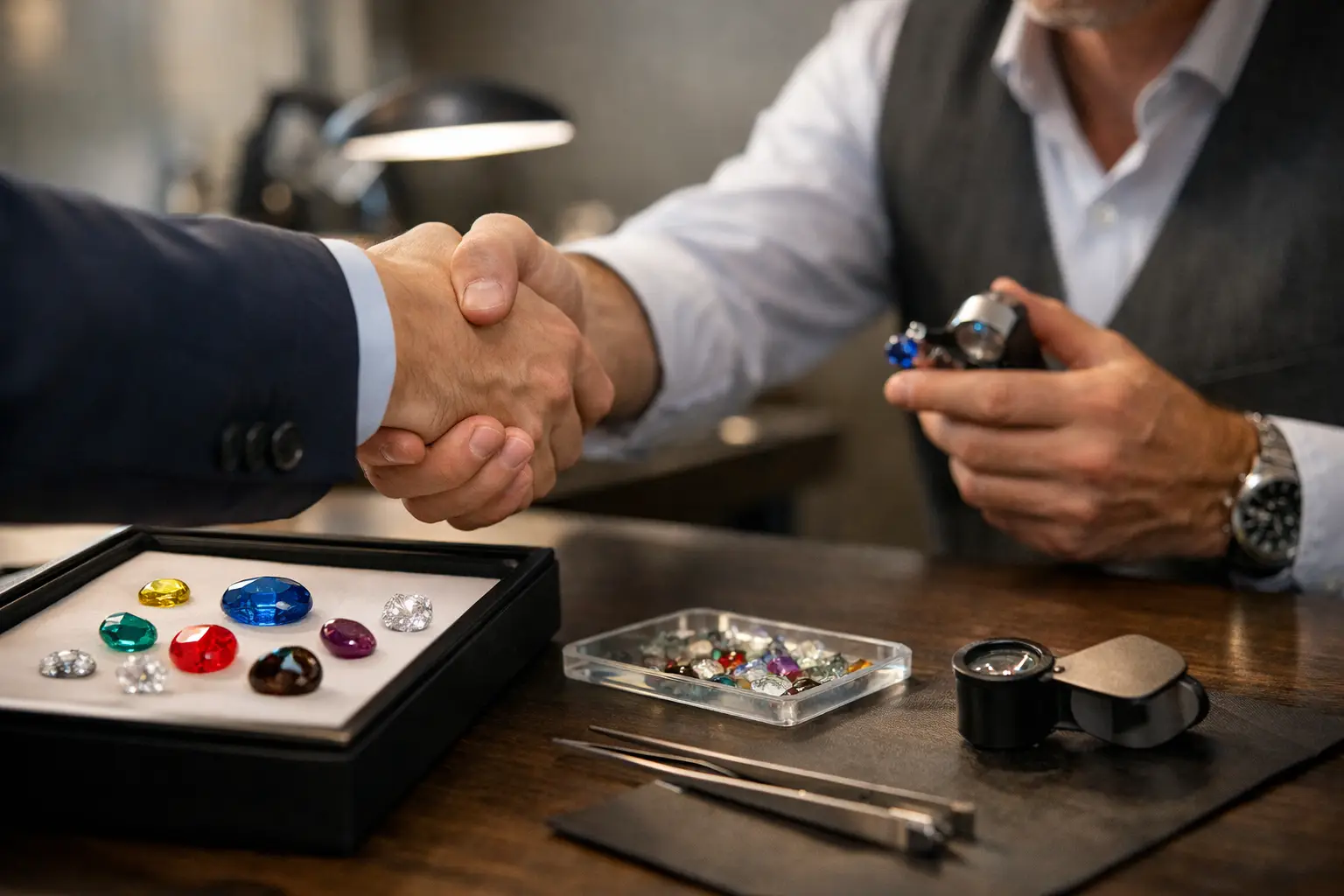
A sapphire can appear vividly blue in a dealer’s photograph, then reveal a different personality when held in natural light. That difference is precisely why choosing among gemstone dealers is about more than finding an attractive stone at a favorable price. It is about finding a specialist who can explain what the gemstone is, where it came from, how it has been treated, and why it is valued as it is.
For an engagement ring, a custom piece, or a collector’s acquisition, the right dealer gives you room to look closely and ask considered questions. The experience should feel personal, informed, and unhurried. Natural gemstones are individual by nature. A trustworthy dealer helps you understand that individuality rather than presenting every stone as interchangeable.
What Trusted Gemstone Dealers Disclose
The most useful conversations begin with clear facts. A dealer should be prepared to describe a gemstone’s species and variety, carat weight, measurements, color, clarity characteristics, cut, origin where known, and treatment status. Not every detail carries the same weight for every buyer, but none should be difficult to obtain.
Treatment disclosure deserves particular attention. Many sapphires on the market have been heat treated, a long-established and widely accepted practice that can improve color and clarity. A heated sapphire can be beautiful and valuable. An unheated sapphire, however, is rarer, especially when it combines strong natural color with fine clarity and a graceful cut. The distinction can affect rarity, price, collectibility, and the story you attach to the stone.
A careful dealer will not imply that one choice is universally better. It depends on your priorities. Someone selecting a meaningful blue sapphire for a ring may find an expertly heated stone offers exceptional beauty within their budget. A collector seeking natural rarity may prefer an unheated Ceylon sapphire with a respected laboratory report.
Origin should be discussed with similar care. Sri Lanka has produced celebrated sapphires, spinels, zircons, garnets, and other colored gemstones for centuries. Fine Ceylon sapphires are admired for their lively color, crystalline transparency, and distinctive character. Yet origin is not a shortcut for quality. A sapphire’s beauty remains specific to the individual stone, and an origin opinion should be presented as evidence-supported information, not a sweeping guarantee.
Questions to Ask Gemstone Dealers Before You Buy
A reputable dealer welcomes thoughtful questions because they show that you are choosing with intention. Start by asking whether the gemstone is natural or laboratory-grown. Both have a place in jewelry, but they are fundamentally different materials with different rarity, market value, and provenance. The answer should be immediate and plainly stated.
Then ask whether the stone has been heated or received any other treatment. Diffusion, fracture filling, irradiation, coatings, and dyeing can have a far greater effect on appearance and durability than conventional heating. These treatments are not necessarily unsuitable for every purchase, but they should never be a surprise after payment.
It is also wise to ask about documentation. For significant gemstones, an independent laboratory report can confirm identity and provide an opinion on treatment and, in many cases, geographic origin. A report is particularly valuable for unheated sapphires, padparadscha sapphires, rare colors, and higher-value stones. For more accessible gems, documentation may not always be proportionate to the purchase, but accurate written details remain essential.
Ask to see the stone in more than one light source if possible. Daylight, warm indoor light, and neutral lighting can each change how a sapphire or spinel presents. Some gems shift color noticeably under different lighting, while others hold their color more consistently. Videos are useful for Australia-wide and international buyers, but clear still images, honest descriptions, and a conversation about color are equally important.
Finally, ask what you are seeing in the gem itself. Natural inclusions are not automatically flaws. Fine needle-like silk, a tiny crystal, or a subtle fingerprint inclusion may help confirm a stone’s natural formation and can be entirely acceptable in a gemstone intended for jewelry. The question is whether those characteristics affect beauty, durability, or value in a meaningful way.
Why Price Comparison Can Mislead
Two sapphires of the same carat weight can differ dramatically in price. A simple comparison based on weight or color name rarely tells the full story. A one-carat sapphire with rich, even color, bright transparency, fine cutting, no heat treatment, and Sri Lankan origin may be far rarer than a larger stone with a dark tone, visible windowing, or extensive treatment.
Color is often the first quality people notice, but it has several parts. Hue refers to the dominant color, tone describes how light or dark it is, and saturation concerns intensity. A sapphire can be blue yet appear grayish, overly dark, or slightly green depending on its color balance. In person, the most appealing stone is often the one with brightness and life rather than the deepest possible color.
Cut matters because it determines how light moves through the gemstone. Colored gemstones are usually cut to preserve weight and showcase the natural crystal, rather than to rigid standardized proportions. This means a small window or asymmetry may be acceptable in some stones, especially in unusual shapes or larger sizes. Still, a good dealer should point out any feature that noticeably affects the gem’s face-up beauty.
Price also reflects supply. A fine natural pink sapphire, teal sapphire, padparadscha sapphire, or cobalt-blue spinel may command a premium because genuinely fine examples are scarce. Rarity should be supported by the stone’s qualities, not used as a vague sales phrase. The most satisfying purchase is one where you understand what your budget is paying for.
Provenance Is More Than a Label
For many clients, the appeal of a natural gemstone is inseparable from its journey. A sapphire formed deep within the earth, recovered from Sri Lankan gem-bearing gravels, selected by a specialist, and later set into a ring has a history no mass-produced product can replicate.
That story carries greater meaning when sourcing is close and transparent. Dealers with direct relationships to mining families, cutters, and trusted local networks can often provide greater clarity about how a stone entered the market. Direct access does not remove the need for gemological scrutiny or documentation. It does, however, create a stronger foundation for honest provenance and careful selection.
At Ceyloe, Sri Lankan heritage and direct access to family-owned mines inform the selection of natural Ceylon sapphires and colored gemstones. For buyers, that kind of connection should translate into clear answers, not embellished claims. The value of provenance lies in being able to understand and trust the path behind the gemstone.
Choosing a Dealer for a Custom Jewelry Project
A loose gemstone should be considered not only for how it looks in a tray, but for how it will live in jewelry. This is especially relevant for engagement rings and pieces designed for regular wear. Sapphire is an excellent choice because of its durability, while zircon, tourmaline, garnet, and spinel each require a more considered approach to setting design and daily care.
Your dealer should be able to discuss whether the stone suits a ring, pendant, or earrings, and whether its shape, depth, and inclusions create any setting considerations. A delicate peach sapphire may call for a different metal choice than a vivid blue stone. A shallow oval might benefit from a setting that protects its girdle and avoids drawing attention to a window.
The best custom work begins with the gemstone rather than forcing the gemstone into a predetermined design. A skilled specialist can help balance color, proportions, budget, wearability, and personal style. This is where a private viewing or detailed remote consultation can be especially valuable.
Signs to Step Back
There are a few moments when it is sensible to pause. Be cautious if treatment is described vaguely, if origin is promised without supporting information, or if a dealer discourages questions about a stone’s condition. Pressure to buy immediately is another poor sign, particularly for a significant purchase.
Be equally cautious with photographs that appear heavily edited or descriptions that rely entirely on superlatives. Terms such as “rare,” “exceptional,” and “investment grade” should be supported by specifics: color quality, treatment status, size, origin, documentation, and market context. A truly fine gemstone does not need exaggerated language to hold attention.
Choosing a gemstone is partly an informed decision and partly a personal response. Give yourself time to see the stone, understand its natural characteristics, and imagine the life it may hold. The right dealer will respect that pause, because a gemstone chosen with clarity becomes more meaningful each time it is worn.
