
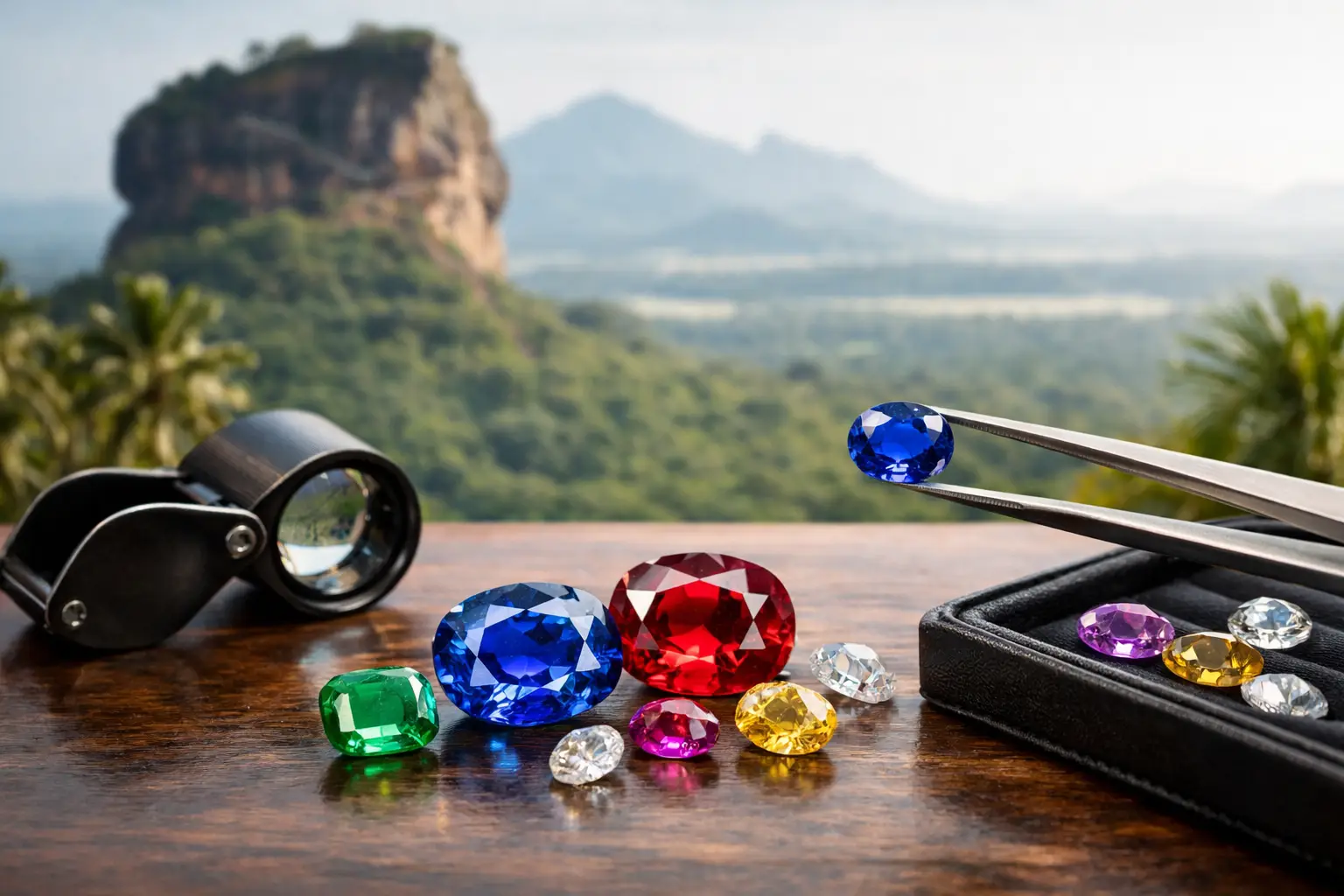
A fine sapphire can look entirely different in a showroom, at a window, and in the open air. That is where a considered Sri Lankan gemstone buyer guide becomes useful: not to reduce a remarkable stone to a checklist, but to help you recognize what gives it lasting character.
Sri Lanka, long known as Ceylon in the gem trade, is admired for sapphires with luminous color, graceful crystal, and an exceptional range of hues. Its gemstones are not interchangeable commodities. A soft cornflower blue sapphire, a vivid yellow stone, and a delicate padparadscha may all come from the same island, yet each should be assessed on its own merits.
For an engagement ring, a collector’s stone, or a future heirloom, the best purchase begins with clear questions and enough time to look closely.
Start With the Stone, Not the Label
“Ceylon sapphire” is a meaningful description of geographic origin, but it is not a guarantee of quality on its own. Sri Lanka produces beautiful sapphires across a wide spectrum of color, clarity, size, and value. A stone described as Ceylon should still be evaluated for its actual appearance, treatment history, cut, and supporting documentation.
Begin by viewing the gemstone in more than one lighting condition. Daylight often reveals a sapphire’s truest personality, while warmer indoor light can bring out violet, gray, or green undertones that were less apparent before. If you are choosing remotely, ask for video in natural daylight as well as standard indoor lighting. Still photographs can be useful, but they cannot fully show brilliance, transparency, or color shift.
The right color depends partly on taste. Some buyers seek the classic medium-to-vivid blue associated with Ceylon sapphires. Others are drawn to icy white sapphires, sea-toned teals, golden yellows, forest greens, or pinks with a gentle blush. There is no universal “best” shade. What matters is whether the color feels alive, balanced, and appealing to you without relying on overly dark tone or excessive saturation.
A Sri Lankan Gemstone Buyer Guide to Color and Cut
Color is usually the first value factor buyers notice, but it has three parts: hue, tone, and saturation. Hue is the basic color, such as blue or pink. Tone refers to lightness or darkness. Saturation is the strength or purity of that color.
A blue sapphire may have a beautiful hue but appear too dark once set in a ring. Another may be light yet have a clean, airy radiance that is ideal for someone who prefers subtle color. Fine stones tend to show color evenly across the face, though natural variation is not automatically a flaw. Slight zoning can be part of a sapphire’s individual identity, particularly when it does not distract from the overall beauty.
Cut deserves the same attention. Sri Lankan gemstones are often cut to preserve carat weight and respect the natural shape of the rough, so proportions can vary more than in mass-produced stones. This can be a worthwhile trade-off when the result retains exceptional color or a rare size. Still, look for a stone that returns light well. A large pale or dark area in the center, known as a window or extinction, can make a gem appear less lively.
Do not judge size by carat weight alone. Sapphire is denser than diamond, so a one-carat sapphire will generally look smaller than a one-carat diamond. Request millimeter measurements, especially when choosing a gemstone for a specific setting. Face-up dimensions and shape will have more influence on how substantial the finished ring appears.
Natural Inclusions and Everyday Wear
Natural gemstones commonly contain inclusions, which are internal features formed as the crystal grew. In a Sri Lankan sapphire, these can include fine silk, crystals, fingerprints, or feather-like patterns. Inclusions can support the impression of natural origin and make one stone distinct from another.
The practical question is not whether a stone is perfectly clean under magnification. It is whether inclusions are visible to the unaided eye, interrupt transparency, or create a durability concern. A discreet inclusion may be entirely acceptable, even in a fine gemstone. An inclusion that reaches the surface or sits near a vulnerable point may require a thoughtful setting choice.
Sapphire ranks highly for daily wear, making it a natural choice for engagement rings and jewelry worn often. Yet hardness does not mean indestructibility. A secure setting, considered design, and occasional professional inspection remain part of owning a fine gem well.
Understand Treatment Before You Compare Value
Treatment status is one of the most important distinctions in any gemstone purchase. Many sapphires on the market have been heat treated, a long-established and widely accepted practice used to improve color and clarity. A heated sapphire can still be beautiful and valuable, and it may offer access to a stronger color or larger size within a given budget.
Unheated sapphires are rarer because they show their beauty without conventional heat enhancement. When color, clarity, size, and cut are all appealing in an unheated stone, scarcity can have a significant effect on value. That does not mean every unheated sapphire is preferable to every heated one. A buyer should compare the actual stones, then decide whether natural untreated rarity is central to the purchase.
More extensive treatments require additional caution. Ask directly whether the gemstone has been heated, diffused, fracture filled, irradiated, coated, or otherwise enhanced. The answer should be clear rather than vague. A reputable specialist will explain treatment status plainly and price the stone accordingly.
Certificates, Origin, and What They Can Tell You
An independent laboratory report can be valuable, particularly for a high-value sapphire, padparadscha, spinel, or collector stone. Depending on the laboratory and the stone, a report may identify the species and variety, state whether heating is detected, and offer an opinion on geographic origin.
Origin opinions are based on scientific comparison of internal features and chemical characteristics against known reference material. They are expert conclusions, not a simple passport stamp. For that reason, the report should be read alongside the seller’s disclosure, the stone’s visual quality, and the confidence you have in the source.
A certificate is not a substitute for seeing whether you love the gem. Nor is the absence of a report always a reason to dismiss a smaller or more accessible stone. The level of documentation should reflect the value and purpose of the purchase. For an important unheated sapphire or a rare padparadscha, laboratory documentation is often especially worthwhile.
Ask About Provenance With Specificity
Sri Lanka’s gem heritage includes generations of family-run mining, trading, cutting, and lapidary knowledge. A meaningful provenance story goes beyond a broad claim that a stone is “from Ceylon.” Ask how the supplier knows the origin, whether the stone was acquired through established local relationships, and what treatment disclosures accompany it.
For buyers who value a direct connection to Sri Lanka, responsible sourcing can be as significant as color. It creates a more personal relationship with the gemstone and can offer confidence that the journey from mine to jeweler has been handled with care.
Before committing, these questions are worth asking:
- Is the gemstone natural, and what species or variety is it?
- Has it received any treatment? If so, what treatment?
- What are its exact carat weight and millimeter measurements?
- Is a laboratory report available or recommended for this stone?
- Are there visible inclusions, color zoning, or setting considerations I should understand?
Choose for Your Design and Your Life
A loose gemstone gives you freedom, but it also asks for a little planning. Consider how the stone will be worn before making the final choice. An emerald-cut sapphire can feel elegant and architectural but may reveal inclusions more readily than a brilliant oval. A pear or marquise can create a longer look on the hand, while a cushion often suits both antique-inspired and contemporary designs.
For an engagement ring, consider finger coverage, lifestyle, metal color, and whether you want diamonds or other gems alongside the center stone. Yellow gold can enrich a yellow, peach, or green sapphire. Platinum and white gold can give blue, white, and cool-toned stones a crisp frame. There are no fixed rules, only combinations that either support or compete with the gem’s character.
If a stone is being selected as a gift or an heirloom, favor a color that still feels compelling after repeated viewing. The most memorable gemstones tend not to be the loudest. They are the ones that reveal new depth when the light changes and remain unmistakably their own.
A Sri Lankan gemstone should invite a pause before it becomes jewelry. Look at it in quiet light, ask the questions that matter, and choose the one you will be glad to see every day.
