
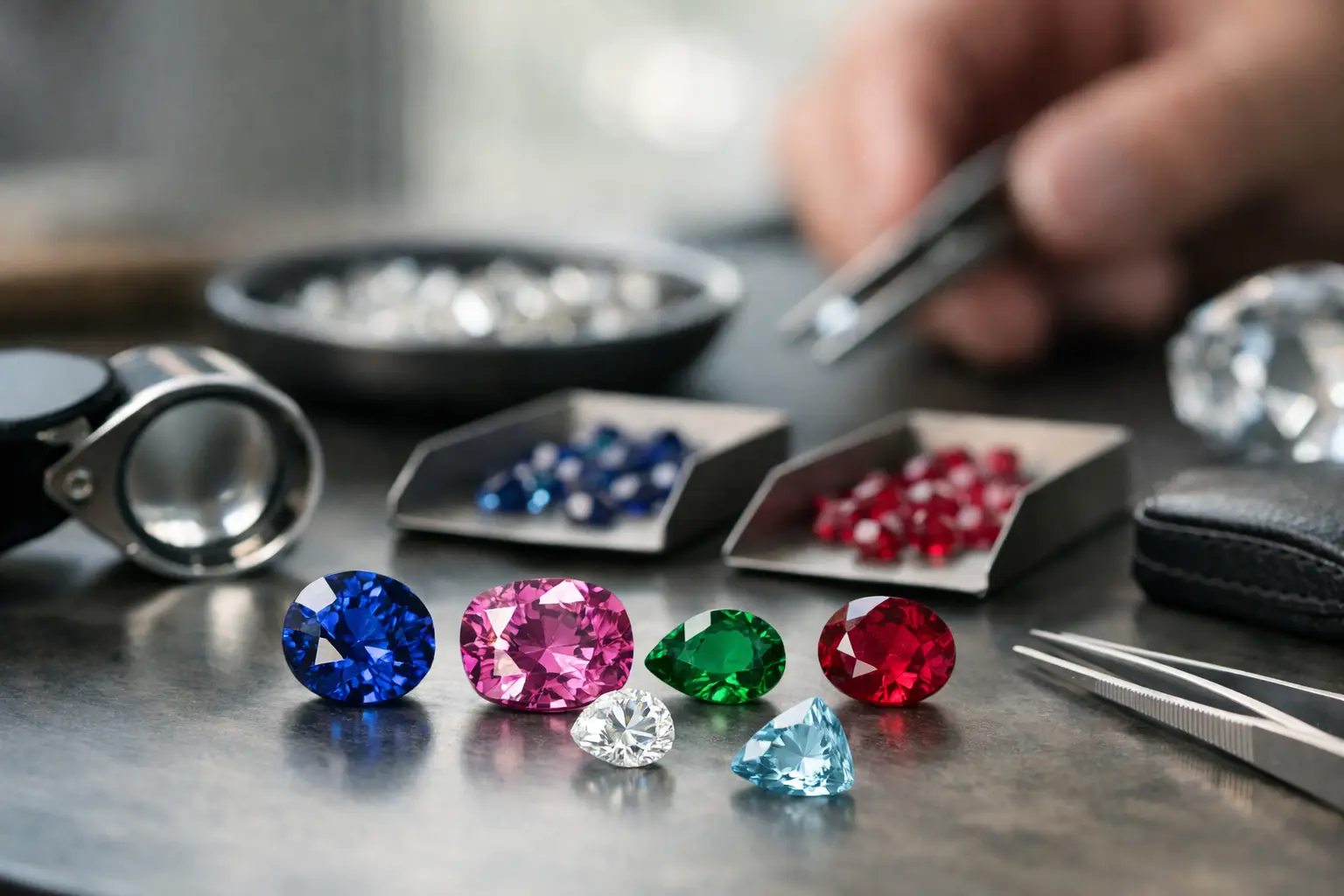
A loose gemstone is not simply a component waiting to be set. Its color shifts with the light, its inclusions record its natural formation, and its origin can connect it to a particular place and history. That is why knowing where to buy loose gemstones matters as much as deciding which gemstone to buy. The right seller gives you room to look closely, ask thoughtful questions, and choose a stone for what it truly is.
For an engagement ring, a future heirloom, or the beginning of a collection, the best purchase is rarely the fastest one. It is the one made with a clear understanding of quality, treatment, value, and provenance.
Where to buy loose gemstones: start with a specialist
A reputable loose gemstone specialist is often the strongest place to begin, particularly when you are considering sapphires, spinel, tourmaline, zircon, or another colored stone whose value cannot be reduced to carat weight alone. Unlike a general jewelry retailer, a specialist should be able to discuss the nuances that make one gem distinct from another: hue, tone, saturation, cut, clarity, origin, and treatment history.
This knowledge is especially valuable with natural sapphires. Two blue sapphires of the same size can look and be priced very differently. One may have a crisp, lively blue with fine clarity, while another may appear dark, grayish, or overly inky indoors. A specialist can help you assess the stone in more than one lighting environment and explain why it presents the way it does.
For buyers drawn to Sri Lankan gemstones, direct sourcing adds another layer of confidence. Sri Lanka has supplied the world with exceptional sapphires, spinels, zircon, and garnet for centuries. Its sapphires are admired for their luminosity and breadth of color, from classic blue to yellow, pink, teal, white, bi-color, and the rare pink-orange of padparadscha. A seller with established relationships in the region is better placed to speak honestly about a gem’s journey and selection.
At Ceyloe, that relationship begins with Sri Lankan gemstone heritage and access to family-owned mines, then continues through careful selection for natural beauty, authenticity, and individual character.
What a trusted seller should tell you
A beautiful photograph is useful, but it is not enough. Before purchasing a loose gemstone, expect clear, specific disclosure. This is not an optional extra for a meaningful purchase. It is the foundation of trust.
The seller should identify the gemstone species and, where relevant, variety. “Sapphire,” for example, is a variety of corundum, while ruby is also corundum. A description should state the color, carat weight, dimensions, shape, and cut. Dimensions matter greatly if the gemstone is intended for a ring or another custom design, since a well-cut 1-carat stone may face up differently from another 1-carat stone.
Treatment disclosure deserves particular attention. Many sapphires are heated to improve color or clarity, and heat treatment is an accepted practice when it is disclosed. Unheated sapphires are rarer and can command a premium when their quality is strong. Neither option is automatically right for every buyer. A heated sapphire may offer remarkable beauty at a more accessible price, while an unheated stone may appeal to someone who values rarity and natural formation above all else.
Some treatments require greater caution. Diffusion treatment, fracture filling, dyeing, and coatings can materially affect durability, appearance, or long-term value. Ask plainly: Has this stone been treated in any way? If so, what treatment was used, and is it stable under normal wear? A knowledgeable seller will answer directly, without vague language.
Certificates are useful, but context matters
For higher-value gemstones, an independent laboratory report can provide valuable reassurance. Depending on the stone, a report may confirm species, identify certain treatments, and offer an opinion on geographic origin. Origin reports are particularly relevant for exceptional sapphires, rubies, emeralds, and collector-grade stones.
A certificate should support the seller’s disclosure, not replace it. Laboratory reports have limits. Not every gem warrants a report, and an origin opinion may be stated as consistent with a region rather than as an absolute fact. Reports also do not tell you whether you personally love the gem’s color, proportion, or character.
Ask whether the certificate belongs to the actual stone being offered and whether its details match the listed weight and measurements. If a report is not included, ask whether one is available or advisable for the value of the purchase. For a modestly priced gemstone intended for a personal piece, detailed seller documentation may be entirely appropriate. For a significant sapphire or collector stone, independent documentation is often a sensible consideration.
Buying online versus seeing a gemstone in person
Buying loose gemstones online can be an excellent option when the seller provides accurate images, videos, full specifications, treatment disclosure, and a clear return policy. It also gives you access to a broader range of colors and shapes than many local stores can hold at one time. This is particularly helpful when searching for something specific, such as a teal sapphire, an elongated oval, or an unheated Ceylon sapphire.
Still, colored gemstones are difficult to capture perfectly. Screen settings, editing, and lighting can change how a stone appears. Ask for video in daylight-equivalent lighting and, when possible, ask how the gem looks in softer indoor light. A sapphire that is vivid under bright showroom lights may look more subdued at dinner or in an office. That does not make it a lesser gem, but it should align with your expectations.
An in-person viewing remains valuable for high-value purchases or when you are choosing an engagement stone. You can assess how the color behaves as the gemstone moves, whether the cut has pleasing symmetry, and how it feels at the scale you intend to wear. A private viewing or showroom appointment also creates space for the questions that are easy to overlook in a quick online transaction.
Other places to buy, and their trade-offs
Independent jewelers can be a good choice when you want a gemstone and custom setting managed together. The best jewelers work with trusted gemstone suppliers and can explain the stone’s details before designing around it. The trade-off is that their loose inventory may be limited, or the gemstone selection may be secondary to the finished jewelry.
Gem shows offer the pleasure of seeing a large number of stones side by side. They can be worthwhile for experienced enthusiasts who know how to compare quality and ask for documentation. However, quality and disclosure standards vary widely from booth to booth. The excitement of a show should never replace careful examination, a written invoice, and time to consider the purchase.
Online marketplaces and auction platforms can appear tempting because prices are often lower. Yet the savings may reflect incomplete treatment disclosure, inaccurate photography, uncertain origin claims, or a seller with little recourse if the stone is not as described. These platforms suit buyers who can independently evaluate gemstones and accept more risk. For a first major purchase, a specialist with a clear reputation and responsive service is usually the more reassuring path.
Match the gemstone to its future life
Where you buy also depends on how the stone will be worn. A sapphire is a practical choice for an engagement ring because corundum has excellent durability for daily wear. Spinel is also a beautiful, durable option, while zircon and some tourmalines need more thoughtful setting design and care. A delicate collector gem may be perfect for a pendant yet less suitable for a ring worn every day.
Tell the seller your intended design before you commit. They can help you consider shape, depth, size, and setting protection. A stone with a deep pavilion may require a higher setting. A gem with a soft edge may benefit from a protective bezel. These are not reasons to avoid an unusual stone. They are reasons to choose it with the finished piece in mind.
A considered purchase begins with a conversation
The most worthwhile loose gemstone purchases tend to start with curiosity rather than urgency. Ask to compare stones. Request honest guidance on treatments and value. Notice whether the seller speaks about natural inclusions with clarity rather than treating every characteristic as a flaw.
Choose the gemstone that continues to hold your attention after you understand its details. A well-sourced stone with a known story, a color you genuinely love, and quality appropriate to its purpose will always feel more personal than a gem chosen only from a grading line or a price tag.
