
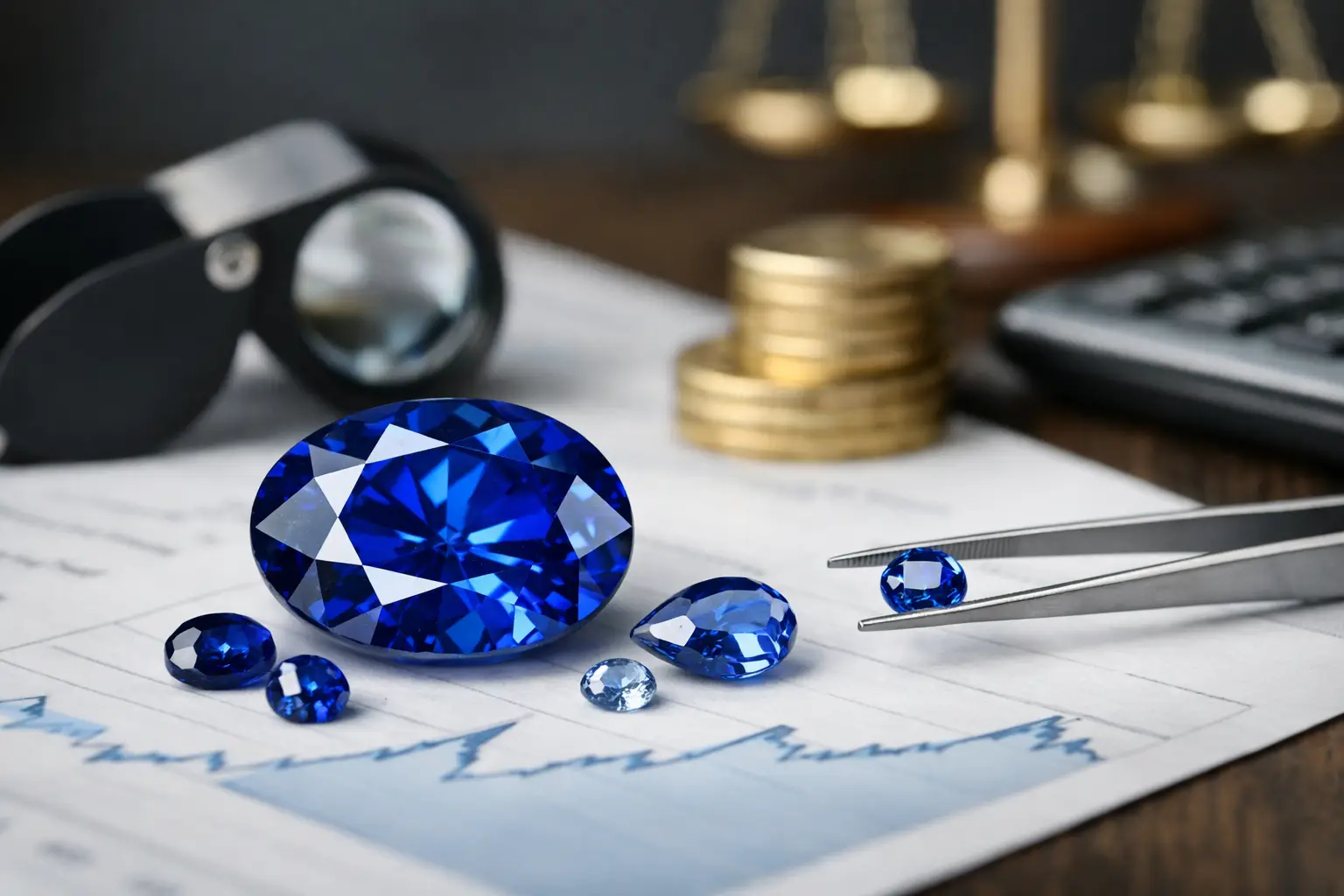
A Sri Lankan sapphire price per carat can range from a few hundred dollars to many thousands, yet carat weight alone never tells the full story. Two natural sapphires of the same size may differ dramatically in value because one has a vivid, open blue and no heat treatment, while the other has a darker tone, visible inclusions, or a treatment that improves its appearance.
For a gemstone intended for an engagement ring, a personal heirloom, or a collection, the more useful question is not simply, “What does it cost per carat?” It is, “What quality, rarity, and natural character does this particular stone offer for its price?”
What Determines Sri Lankan Sapphire Price Per Carat?
Sri Lanka, historically known as Ceylon, is one of the world’s most important sapphire sources. Its gem gravels have produced exceptional blue, pink, yellow, green, white, teal, bi-color, and padparadscha sapphires for centuries. Origin contributes to desirability, but it is the individual gemstone that determines value.
Color is usually the first driver
For blue Ceylon sapphires, the most valuable colors tend to be vivid and well-balanced: neither overly dark nor pale, with strong saturation and an even face-up appearance. A fine stone often looks alive in varied light. It should not become inky outdoors or gray under softer indoor lighting.
The most sought-after blue colors command a significant premium, especially in larger stones. That does not make lighter blue sapphires, cornflower tones, or deeper royal blues lesser choices. They simply sit in different value categories. Personal preference matters, particularly when the stone will be worn every day.
Fancy-color sapphires follow their own market. A bright, clean yellow can offer remarkable value beside a comparable blue. Fine pink and padparadscha sapphires, with their delicate balance of pink and orange, can be exceptionally valuable due to their rarity. Teal, parti, and bi-color sapphires are prized for individuality, though pricing depends heavily on the appeal and definition of their color zoning.
Treatment status changes the value conversation
Heat treatment is common in sapphires and, when properly disclosed, is accepted throughout the trade. It can improve color and clarity, making beautiful natural sapphires available at a wider range of prices. A heated Sri Lankan sapphire can still be an excellent, meaningful gemstone.
An unheated sapphire is rarer because it has retained its beauty without human enhancement. When an unheated stone also has fine color, good clarity, and a desirable size, its price per carat rises sharply. The premium is not for an abstract label. It reflects genuine scarcity.
Other treatments, such as diffusion or fracture filling, require additional care in valuation. These stones may have a lower initial price, but they do not hold the same rarity or long-term appeal as a natural sapphire with traditional heat treatment or no treatment. Clear disclosure is essential, and an independent laboratory report can provide valuable reassurance for an important purchase.
Clarity should be judged with the eye, not a checklist
Natural sapphires commonly contain inclusions, and these internal features can be part of their identity. The aim is not necessarily a flawless stone under magnification. More important is whether inclusions are visible without magnification, interrupt transparency, affect brilliance, or compromise durability.
A sapphire that appears clean to the naked eye, with bright transparency and lively reflections, will usually be valued more highly than a similarly colored stone with obvious silk, crystals, or fractures. In some unheated sapphires, fine silk can support evidence of natural origin and improve the stone’s soft, velvety character. Once it becomes dense enough to dull the gem, however, it can reduce value.
Cut creates beauty and protects value
Sapphires are often cut to preserve weight from the rough, so a higher carat figure does not automatically mean a larger-looking gemstone. A deep stone may carry much of its weight below the girdle and appear smaller from above than a well-proportioned stone of equal weight.
A thoughtful cut balances color, brilliance, shape, and face-up size. Look for a gemstone that appears evenly bright, without a large pale window in the center or heavy areas of extinction. Slight asymmetry is not unusual in hand-cut natural stones, especially when the cutter has prioritized color, but the overall result should be attractive and intentional.
Typical Sri Lankan Sapphire Price Per Carat Ranges
Broad price ranges can be useful as a starting point, but they should never replace an assessment of the individual gemstone. In the wider market, commercial-quality heated Sri Lankan sapphires may begin at a few hundred U.S. dollars per carat. Fine heated blue sapphires with attractive color and eye-clean clarity commonly move into the low thousands per carat.
Fine unheated Ceylon sapphires often begin at several thousand dollars per carat and can rise substantially with exceptional color, clarity, documented origin, and size. Rare padparadscha sapphires and collector-quality blue stones may command five figures per carat or more. These are broad market observations, not fixed price brackets. A stone’s shape, laboratory documentation, and beauty in person can move it well above or below an expected range.
Size also changes the calculation. A high-quality 3-carat sapphire is not simply three times the cost of a comparable 1-carat stone. Fine material becomes harder to find as size increases, so the per-carat price typically rises at key thresholds, particularly above 2, 3, and 5 carats. Conversely, a large stone with weak color or poor transparency may still be less valuable per carat than a smaller, more beautiful gem.
For Australian buyers, the final figure should be understood in AUD and should include the practical details of the purchase, such as any applicable tax, insurance, shipping, and the cost of a custom setting. Comparing only a headline per-carat number can conceal meaningful differences.
Why Origin and Documentation Matter
“Sri Lankan” and “Ceylon” are sometimes used loosely in gemstone marketing. A reputable seller should be able to explain what is known about a sapphire’s origin, treatment status, and supporting documentation. For higher-value stones, a report from a recognized gemological laboratory is often worthwhile, particularly for an unheated sapphire or a stone represented as padparadscha.
A report does not decide whether a gem is beautiful. It does, however, provide an important factual foundation. Combined with transparent imagery, videos in different lighting, accurate measurements, and a knowledgeable conversation, it helps a buyer make a well-informed decision.
Direct sourcing can matter here as well. Established relationships with Sri Lankan cutters, dealers, and family-owned mines may provide a clearer path from source to client, but provenance should always be communicated honestly. The most compelling story is one supported by careful selection and straightforward disclosure.
How to Compare Sapphires Fairly
When considering two gemstones, begin by comparing their appearance before their certificates or carat weights. Place color first: which sapphire has the more appealing hue, saturation, and brightness? Then consider transparency, cut, visible inclusions, treatment, and face-up size.
Ask whether the stones are truly comparable. A 2-carat heated oval with a deep pavilion should not be measured against a 2-carat unheated cushion with an open, vivid face-up color as though they belong in the same category. Their prices reflect different combinations of rarity and craftsmanship.
It is also wise to buy for the life the gemstone will have. A collector may prioritize an unheated origin-documented sapphire with a distinctive pedigree. Someone choosing an engagement stone may prefer a beautifully cut heated sapphire with excellent color, durability, and a size that suits the setting. Neither choice is inherently better. The right choice is the one whose qualities align with what you value most.
A sapphire should feel considered, not reduced to a number on a listing. At Ceyloe, that means looking beyond price per carat to the natural character, treatment history, and quiet distinction that make one Sri Lankan gemstone worth choosing over another.
Comment (1)