
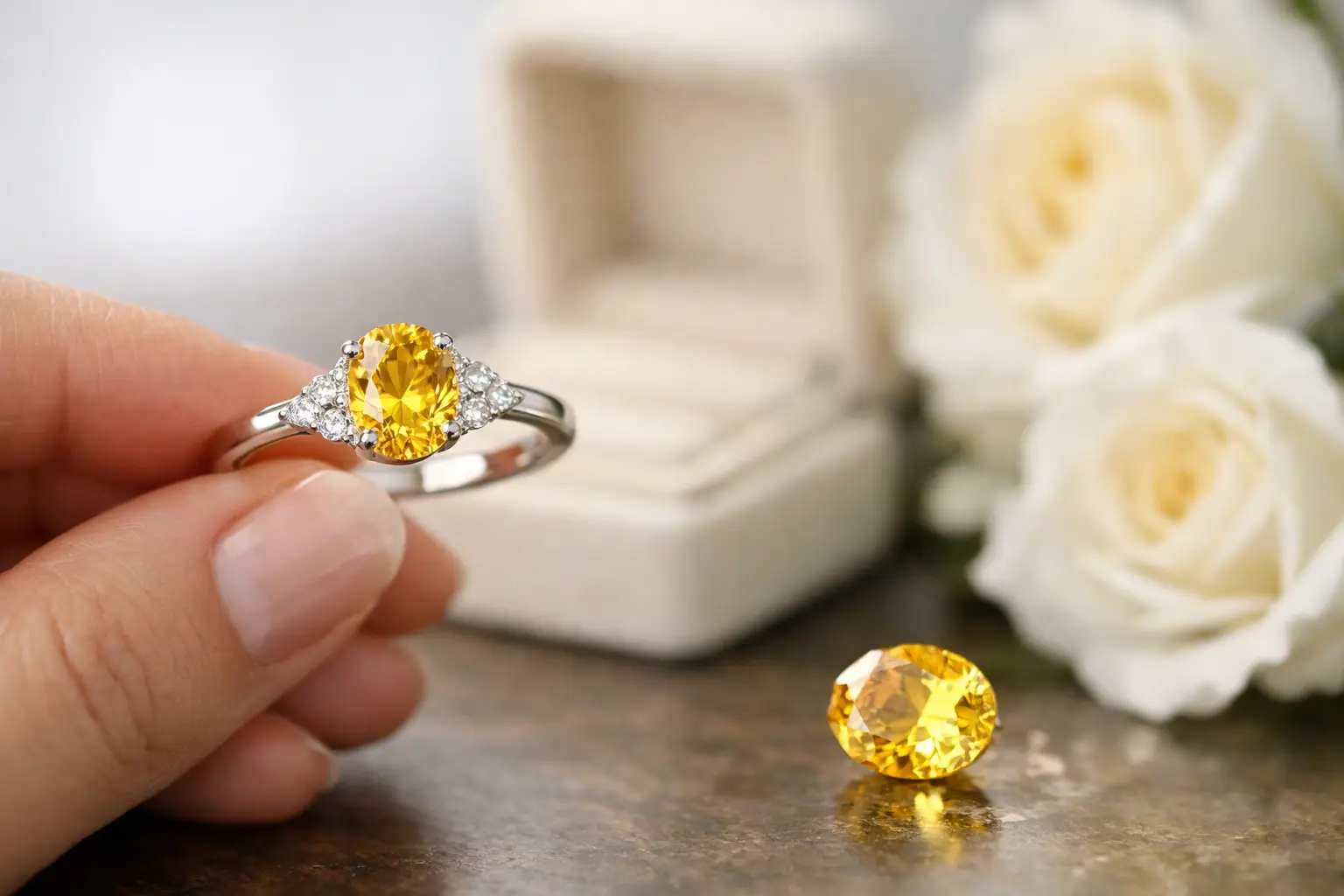
A yellow sapphire engagement ring has a presence that is immediately personal. Its color can feel like warm morning light, rich golden honey, or a clear lemon tone, depending on the stone. For couples drawn to something distinct from the expected diamond or blue sapphire, it offers beauty with real durability and a story that begins deep within the earth.
A fine yellow sapphire is not simply defined by its carat weight. Its color, cut, clarity, treatment history, and origin all influence how it looks on the hand and how it will be valued over time. Choosing well begins with understanding which of those qualities matters most to you.
Why Choose a Yellow Sapphire Engagement Ring?
Yellow sapphires belong to the corundum family, the same mineral family as blue, pink, green, and padparadscha sapphires. With a hardness of 9 on the Mohs scale, they are among the most practical natural gemstones for everyday jewelry. They resist scratching far better than many beautiful but softer gems, making them a considered choice for a ring intended to be worn every day.
Their appeal is also emotional. Yellow has warmth without being overly formal. It can look bright and contemporary in a clean platinum setting, softly romantic beside rose gold, or classically rich in yellow gold. Unlike a standardized white stone, each natural yellow sapphire has its own character. Two gems of the same size can appear completely different because of their tone, saturation, and cutting.
For many people, that individuality is the point. An engagement ring can mark a shared decision rather than follow a familiar formula.
Color Is the First Thing You Will See
When assessing a yellow sapphire, color should take priority over a laboratory label or a number on a scale. The most sought-after stones generally show an even, lively yellow with good saturation and enough brightness to remain open and luminous. There is no single perfect shade. Some clients prefer a fresh, lemony yellow; others are drawn to the deeper golden tones often associated with traditional Ceylon sapphires.
A stone that is too pale may appear nearly colorless in certain light. One that is overly dark can lose brightness, particularly once set. The best choice is usually a sapphire with a color you continue to enjoy in daylight, warm indoor lighting, and shade. Natural gemstones are responsive to their surroundings, so viewing a stone only under bright display lights rarely tells the full story.
Look for even color across the face of the gem. Small variations can be part of a natural sapphire’s character, but obvious zoning or brownish and greenish areas may affect the overall appearance. A knowledgeable gem specialist can explain whether a color feature is noticeable only under close inspection or likely to be visible in daily wear.
The Distinctive Appeal of Ceylon Yellow Sapphires
Sri Lanka, historically known as Ceylon, has been admired for its sapphires for centuries. Its gem gravels produce yellow sapphires in a wide range of bright, elegant hues, from delicate straw yellow to saturated gold. Many Sri Lankan stones are known for their attractive transparency and lively return of light when well cut.
Origin can add meaningful provenance, but it should not replace careful evaluation of the individual gem. A beautiful sapphire should first be beautiful on its own merits. When color, cutting, natural origin, and documentation align, the result is especially compelling.
Cut Determines Whether the Sapphire Comes Alive
A yellow sapphire can have excellent color and still appear disappointing if it is poorly cut. Cut controls the way light enters the gemstone, moves through it, and returns to the eye. A well-proportioned stone will look bright and animated, while a shallow or overly deep stone may show areas of darkness, a pale window in the center, or reduced sparkle.
Oval and cushion cuts are enduring favorites for yellow sapphire engagement rings because they often show color beautifully and offer a generous visual spread. A radiant cut can create a crisp, lively look, while an emerald cut suits someone who prefers clean lines and broader flashes of light. Round sapphires can be striking, though fine material in a well-cut round is less common and may command a premium.
Do not rely on carat weight alone. Two sapphires with the same weight may look very different in size because of their proportions. It is useful to consider the millimeter dimensions, particularly when choosing a setting or comparing stones. An expertly cut 2-carat sapphire with strong brightness may look more impressive than a heavier gem that faces up dark.
Natural Inclusions Are Part of the Conversation
Most natural sapphires contain internal features formed during their growth. These inclusions can be tiny crystals, delicate needle-like structures, or fine fingerprints visible under magnification. They are one of the signs that make each stone individual.
For an engagement ring, the practical aim is usually a sapphire that appears clean to the unaided eye when viewed at a normal distance. This is often called eye-clean. It does not mean flawless. In fact, completely inclusion-free natural sapphires are unusual, and clarity alone should never be considered ahead of color and cut.
Inclusions need to be assessed with care. Some are harmless visual details hidden within the stone; others can affect transparency or, in rare cases, durability. A professional review helps identify whether an inclusion is simply part of the gemstone’s natural identity or something to consider before setting.
Ask Clearly About Treatment
Treatment disclosure is essential when buying any fine sapphire. Heating is the most common treatment used for sapphires. It can improve color and clarity, and it is widely accepted in the gemstone trade when it is accurately disclosed. A heated yellow sapphire can still be beautiful, natural, and an excellent choice for an engagement ring.
Unheated sapphires have not been subjected to heat treatment after mining. Because they are less common, an unheated stone with desirable color and clarity may be considerably rarer and more valuable. This does not mean every unheated sapphire is preferable. A fine heated stone may offer stronger color or a more attractive appearance within a particular budget.
The meaningful distinction is transparency. Ask whether the stone is heated or unheated, whether it has undergone any other treatment, and whether an independent laboratory report is available. Treatments such as diffusion, fracture filling, or coating should be explained plainly because they can have a greater effect on value and long-term care.
Choose a Setting That Supports the Stone
The metal and setting can shift the personality of a yellow sapphire dramatically. Yellow gold intensifies warmer golden tones and creates a traditional, cohesive look. White gold or platinum offers contrast, making a bright yellow sapphire appear especially crisp. Rose gold brings softness, although it can slightly influence how a pale stone is perceived.
A solitaire allows the sapphire’s color and shape to lead. A halo of diamonds can add scale and brilliance, especially around a smaller center stone. Side stones, whether diamonds or complementary sapphires, provide a more detailed design while keeping the central gem as the focus.
Protection matters as much as style. A bezel setting gives the edge of the sapphire excellent security and a modern profile. Prongs allow more light into the stone but should be well made and checked periodically. For someone with very hands-on work or an active lifestyle, a lower setting is often more comfortable and less exposed to knocks.
Set Your Priorities Before You Compare Stones
Every yellow sapphire engagement ring involves choices. You may prefer the saturated color of a slightly smaller stone over a larger, paler gem. You may decide an eye-clean heated sapphire allows room in the budget for a custom platinum setting. Or you may be looking specifically for an unheated Ceylon sapphire with documented provenance, accepting that rarity will influence price.
It helps to identify your order of priorities before viewing options: color, size, treatment status, origin, clarity, cut, and setting style. This makes comparisons more honest and prevents the decision from becoming overly focused on carat weight. A trusted specialist should be comfortable discussing the strengths and compromises of each stone rather than presenting one quality as universally best.
Care for a Ring Meant to Be Worn
Sapphires are durable, but an engagement ring still benefits from sensible care. Remove it for heavy lifting, gardening, gym sessions, and tasks involving harsh chemicals. Clean it occasionally with warm water, mild soap, and a soft brush, then dry it with a lint-free cloth.
Have prongs and settings checked periodically, particularly if the ring is worn every day. This small habit protects both the sapphire and the craftsmanship around it. Keep any gemstone report, valuation, and treatment disclosure with your insurance documents, as they form part of the ring’s enduring record.
The right yellow sapphire is the one whose color feels unmistakably yours when you look at it in ordinary life. Take time to see it outside the display case, ask direct questions about its natural history, and choose a setting that will let it be worn with confidence for many years.
