
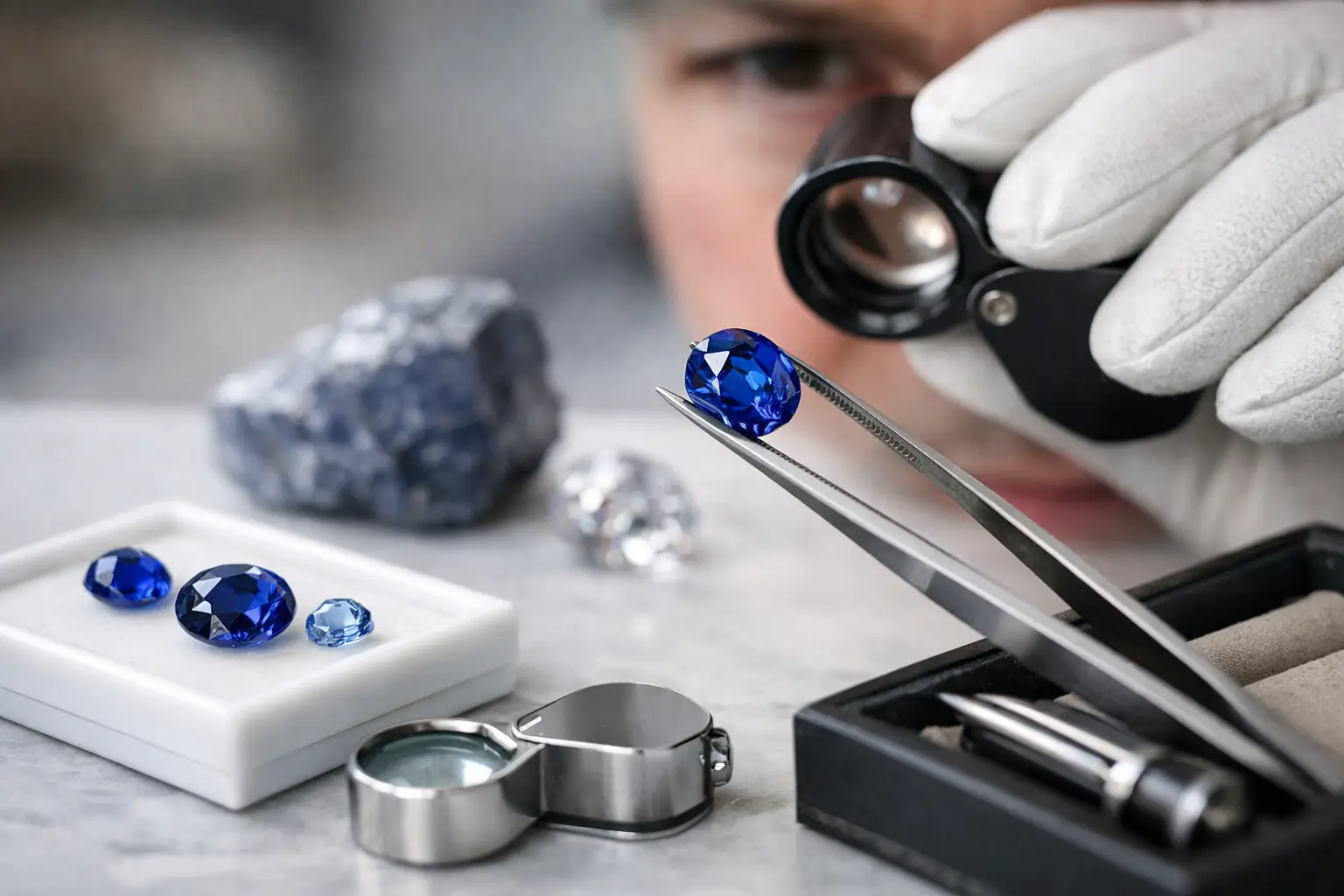
A sapphire may look perfectly natural under a jeweler’s light and still have been heated, diffused, or otherwise enhanced. That is why learning how to identify untreated sapphires begins not with a single visual clue, but with an honest combination of observation, documentation, and independent expertise.
For many buyers, an untreated sapphire carries a particular appeal. Its color was created by nature rather than altered in a furnace, and its inclusions, subtle variations, and rarity tell the story of its formation deep within the earth. Yet treatment status is not always apparent to the naked eye. The most reliable answer comes from a respected gemological laboratory, supported by a knowledgeable seller who is prepared to discuss the stone openly.
What does untreated actually mean?
An untreated sapphire is a natural corundum gemstone that has not been subjected to human intervention intended to improve or alter its color or clarity. In the trade, the term is often used alongside unheated, but the distinction is worth understanding.
A sapphire described as unheated has no evidence of heat treatment. This is the most common meaning buyers have in mind when they ask for an untreated sapphire, because heating is by far the most widely used sapphire enhancement. However, a stone can be unheated and still require careful assessment for other treatments, such as lattice diffusion, surface diffusion, fracture filling, or dyeing.
For a significant purchase, ask whether the sapphire has had any treatment, not simply whether it is unheated. A clear report should state the laboratory’s findings in precise terms, such as no indications of heating or no indications of treatment. Wording matters, especially with rare stones and collector-quality sapphires.
Why heat treatment is so common
Heating sapphires has been an accepted practice for generations. It can lighten overly dark material, strengthen blue color, reduce the visibility of some inclusions, or improve the appearance of pale stones. A heated sapphire remains natural sapphire, but it has been altered after mining.
There is nothing inherently wrong with a treated stone when the treatment is properly disclosed and reflected in the price. Many beautiful, durable sapphires used in engagement rings are heated. The trade-off is rarity. Fine sapphires with appealing color and clarity that have never been heated are less common, particularly in larger sizes or exceptional colors.
Sri Lanka is especially admired for producing a broad range of natural sapphire colors, including blue, yellow, pink, teal, white, green, bi-color, and padparadscha. Within this abundance, genuinely unheated material with strong color and attractive transparency is sought after because it is naturally scarce.
The signs a specialist looks for
Visual examination can raise useful questions, but it cannot prove treatment status on its own. A trained gemologist studies a sapphire under magnification, looking closely at its inclusions and internal structure. Natural inclusions are not flaws to be feared automatically. In an untreated stone, they can be valuable evidence of natural growth and an unaltered history.
Inclusions and internal features
Fine needles of rutile, often called silk, are one feature specialists assess. In an unheated sapphire, silk may appear intact and delicately distributed. High-temperature heating can dissolve, alter, or re-form these needles, leaving characteristic remnants. The exact appearance varies, so this is a diagnostic clue rather than a simple rule.
Gemologists also inspect mineral crystals, liquid-filled cavities, fingerprint-like healing features, and growth zoning. Heating may cause stress fractures around inclusions, altered crystal surfaces, or changes to internal features. These observations require the right equipment and experience. A loupe can reveal beauty and obvious characteristics, but it cannot replace laboratory analysis.
Color that appears too concentrated
Color concentration near the surface, along facet junctions, or within a narrow layer may suggest diffusion treatment. In this process, color-causing elements are introduced from the surface during heating. A sapphire can look vivid face-up while the color is shallow beneath the polished exterior.
Surface diffusion is typically easier to detect than more advanced lattice diffusion, but neither should be judged casually from photographs. A laboratory can examine the stone in immersion, under magnification, and with analytical instruments to determine whether its color is natural.
Clarity that needs context
An exceptionally clean sapphire is not automatically treated, just as an included sapphire is not automatically untreated. Nature produces a wide range of clarity. What matters is whether the internal evidence is consistent with the claimed treatment status.
Be cautious of broad claims such as completely natural with no report, particularly where the sapphire is offered at a price that seems unusually low for its size, color, and apparent quality. The issue is not that a bargain is impossible. It is that treatment disclosure has a direct effect on value, and evidence should match the claim.
A laboratory report is the strongest starting point
If treatment status is important to you, request a report from an established independent gemological laboratory. The report should identify the species as natural corundum, state the variety as sapphire, and provide an opinion on treatment. Where possible, it may also provide an origin opinion, such as Sri Lanka.
Origin and treatment are separate conclusions. A sapphire may be of Sri Lankan origin and heated, or it may be unheated but have an origin that cannot be determined. Do not assume that Ceylon sapphire automatically means untreated. Sri Lankan provenance is meaningful, but the treatment statement is the evidence you need for treatment status.
Laboratory reports are not decorative paperwork. They are part of the gemstone’s record, particularly for a fine unheated sapphire intended for an engagement ring, heirloom jewelry, or a collection. Confirm that the report number, weight, measurements, and description correspond with the stone being offered. If the sapphire has a laser inscription linked to the report, that can provide an additional layer of reassurance.
Questions worth asking before you buy
A trusted gemstone specialist should welcome direct questions and answer them without vague language. Ask whether the sapphire is natural, whether it has evidence of heat treatment, whether any other enhancement has been detected, and whether an independent laboratory report accompanies it.
It is also reasonable to ask about origin, though origin opinions are often expressed as professional conclusions rather than guarantees. For a Sri Lankan sapphire, a seller with direct sourcing knowledge may be able to share useful context about its journey from the island’s gem fields to selection. That personal provenance complements a laboratory report, but does not replace it.
If you are comparing two sapphires, compare more than carat weight. Look at the quality and distribution of color, brightness in ordinary daylight, cut, clarity, origin opinion, treatment status, and documentation. An unheated stone may command a premium, but the right choice depends on your priorities. Some buyers value a larger heated sapphire with rich color; others prefer the rarity and character of a smaller unheated stone.
What you can assess at home, and what you cannot
You can examine a sapphire in daylight and under indoor lighting to see whether you genuinely enjoy its color. Notice whether it becomes overly dark, gray, or inky away from direct light. You can inspect the stone with a 10x loupe for obvious scratches, chips, and inclusions, and compare its details with any accompanying report.
What you cannot reliably do at home is confirm that a sapphire is untreated. Internet tests involving breath, scratches, water, or a phone flashlight do not identify heat treatment or diffusion. Neither does a sapphire’s hardness, because treated and untreated sapphires are both corundum.
Avoid having an unknown stone re-polished, re-cut, or mounted before testing if treatment status is central to its value. Alterations can make examination more difficult, change weight measurements, and complicate the connection between the gemstone and its report.
The value of transparent sourcing
A fine sapphire should never depend on mystery for its appeal. Its color, proportions, natural characteristics, treatment status, and documentation should be discussed plainly. At Ceyloe, the most compelling stones are often those whose individuality remains visible: a velvet blue with fine silk, a soft yellow shaped by a skilled cutter, or a rare unheated Ceylon sapphire with a story that can be clearly told.
When you find a sapphire that speaks to you, give its paperwork and treatment disclosure the same attention you give its color. The stone will be part of a ring, a collection, or a family story for years to come, and confidence in what it is makes that connection more meaningful.
