
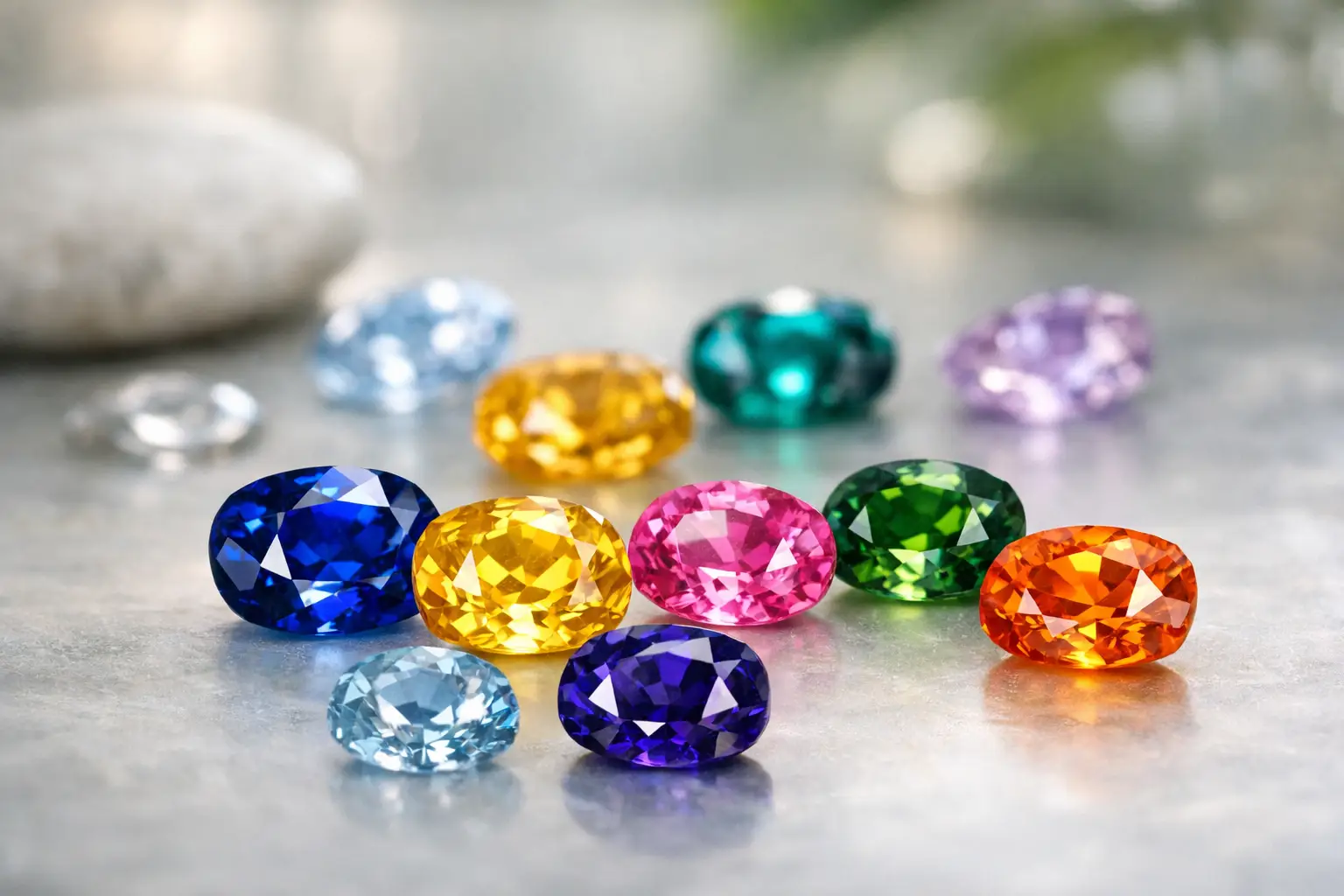
A sapphire does not need to be blue to be a sapphire. In fact, one of the pleasures of choosing this remarkable gemstone is discovering just how broad its natural palette can be. So, what colors do natural sapphires come in? They occur in nearly every color except red, from crisp colorless stones and delicate pastels to vivid blues, greens, pinks, yellows, oranges, and rare blends that seem to change with the light.
For a gemstone chosen to mark an engagement, anniversary, or personal milestone, that range creates a more personal decision. The best color is not necessarily the rarest or most expensive. It is the one that continues to feel like yours when you see it on your hand, in daylight, and years from now.
What Colors Do Natural Sapphires Come In?
Sapphire is the gem variety of corundum, a mineral made of aluminum oxide. Pure corundum is colorless. Small amounts of different trace elements within its crystal structure create the colors we recognize as sapphire.
Iron and titanium are associated with blue sapphire, while iron can also create yellow and green tones. Chromium contributes to pink and red hues. When corundum is red, it is classified as ruby rather than sapphire. This is why a natural red sapphire is not a standard gemological category, even though pink sapphires can range from soft blush to vivid reddish pink.
Natural sapphires may be colorless, blue, yellow, pink, purple, violet, green, teal, orange, gray, or black. They can also show two or more colors within a single stone. These bi-color and parti sapphires are especially appealing to clients seeking something individual rather than a uniform, traditional look.
Sri Lanka, long known as Ceylon, is celebrated for producing sapphires across this full spectrum. Its historic gem gravels are particularly admired for bright, open color and exceptional natural variety, from fine cornflower blue to luminous yellow, mint green, and rare padparadscha sapphire.
Blue Sapphire: The Classic, With Many Personalities
Blue is the color most people picture first, but blue sapphire is far from one look. It may appear pale and airy, velvety medium blue, richly royal, or deep navy. Some stones show a subtle violet undertone, while others lean slightly greenish or grayish.
The most sought-after blue is often described as vivid, with a balanced medium tone and strong saturation. Yet this is not a universal rule. A pale Ceylon blue sapphire can be extraordinarily elegant, particularly in a ring where its brightness is visible from a distance. A darker blue may suit someone who prefers depth and formality, though a stone that is too dark can lose its blue character in lower light.
Color is also affected by cut. A skilled cutter can position the rough to emphasize its best face-up color, while a poorly proportioned stone may show areas of darkness or paler windows. For this reason, two sapphires with similar descriptions can look very different in person.
Yellow, Pink, Green, and Teal Sapphires
Yellow sapphires range from pale lemon and soft champagne through to rich golden yellow. Their sunny color often works beautifully in yellow gold, although a lighter yellow can look equally refined in platinum or white gold. Fine natural yellow sapphires have a warmth that feels joyful without being overly formal.
Pink sapphires are admired for their romantic, contemporary character. The spectrum extends from faint peach-pink and rose to intense hot pink. Stones with a clean, lively pink color are increasingly chosen for engagement rings because they feel distinctive while retaining the durability sapphire is known for.
Green sapphire can be understated and sophisticated. It may be mossy, olive, mint, or a cooler forest green, often with gray, yellow, or blue modifying tones. A pure green sapphire is less common than a green stone with secondary color, and that complexity is often part of its appeal rather than a flaw.
Teal sapphire sits between blue and green. Some lean toward deep ocean blue, while others have a bright blue-green character reminiscent of shallow coastal water. Teal is among the most versatile sapphire colors for custom jewelry because it pairs comfortably with white, yellow, and rose gold, and it offers a distinctive alternative to conventional blue.
Orange and Padparadscha Sapphire
Orange sapphires can range from gentle apricot to vivid mandarin. The rarest and most celebrated members of this family are padparadscha sapphires, a name traditionally associated with a delicate balance of pink and orange. The finest examples possess a soft, glowing color that is neither simply pink nor simply orange.
Padparadscha is one of the most misunderstood sapphire descriptions. Not every peach-colored sapphire qualifies. The classification depends on the balance, purity, and appearance of color, and respected laboratories may differ slightly in their wording. For a significant purchase, a clear discussion of the stone’s origin, treatment status, and any available laboratory documentation is valuable.
Sri Lanka holds a special place in the history of padparadscha sapphire. Exceptional stones from the island are prized by collectors, though beauty must still come first. Origin can add meaning and rarity, but it does not make every stone superior to another beautiful sapphire from elsewhere.
Colorless, Purple, Gray, and Black Sapphires
Colorless sapphire, sometimes called white sapphire in the jewelry trade, offers a crisp and understated alternative to diamond. It is not identical to diamond in brilliance or optical character, but its natural origin and clean appearance make it appealing in thoughtfully designed jewelry.
Purple and violet sapphires can show cool lavender, grape, or rich royal-purple shades. They are often less familiar than blue or pink, which can make a fine example feel especially personal. Depending on the lighting, some purple sapphires may reveal blue or pink flashes.
Gray sapphires have become a quiet favorite for those drawn to softer, modern neutrals. They may be silvery, smoky, blue-gray, or green-gray. Black sapphires are generally very dark blue, dark green, or dark gray rather than truly black in a strict mineral sense. They can be opaque or nearly opaque and offer a dramatic, architectural look.
Some natural sapphires also display asterism, the star-like reflection that moves across the surface of a cabochon-cut gem. Star sapphires are usually seen in blue, gray, black, and occasionally other colors. Their appeal lies in the moving phenomenon, not only the body color.
Why Sapphire Color Is More Than a Name
A color label is only the beginning. Gemologists assess hue, tone, and saturation. Hue is the basic color, such as blue or green. Tone describes how light or dark it is. Saturation refers to the strength or intensity of that color.
A sapphire can be technically blue but appear gray if its saturation is low. A strongly saturated stone may be vivid and valuable, but if it is too dark, it may appear inky rather than luminous. The most pleasing balance depends on the color family, the cut, the size of the stone, and personal preference.
Natural color zoning is another feature worth understanding. As a sapphire grows deep within the earth, trace elements are not always distributed evenly. This can create bands or areas of different color. In some stones, zoning is undesirable if it is obvious face-up. In others, it produces beautiful bi-color patterns and gives the gem an unmistakably natural identity.
Lighting matters as well. A sapphire viewed under warm indoor lighting may look different in daylight. Before committing to a gemstone, it is wise to see videos or view the stone under more than one light source. This is particularly useful for teal, green, purple, and color-changing sapphires.
Natural Does Not Always Mean Unheated
A natural sapphire was formed by nature and mined from the earth. That description is separate from whether it has been treated after mining. Heat treatment is a long-established practice that can improve color and clarity in some sapphires. A heated sapphire remains natural, provided it was not created in a laboratory.
Unheated sapphires can command a premium when they possess beautiful color and clarity without treatment, especially in fine blue, padparadscha, and collector-quality stones. However, an unheated label should not outweigh the actual beauty of the gem. A well-cut, disclosed heated sapphire with a color you love may be the better choice for your design and budget.
What matters is transparency. A trusted gemstone specialist should clearly explain the treatment status, known origin where applicable, and the characteristics that make a particular stone special. At Ceyloe, this begins with careful selection and a respect for the individuality of each natural Ceylon sapphire.
When you are choosing among sapphire colors, allow yourself time with the stone. Notice whether it brightens in daylight, how it sits against your skin, and whether its character still holds your attention after the first impression. That lasting connection is often the clearest sign you have found the right one.
