
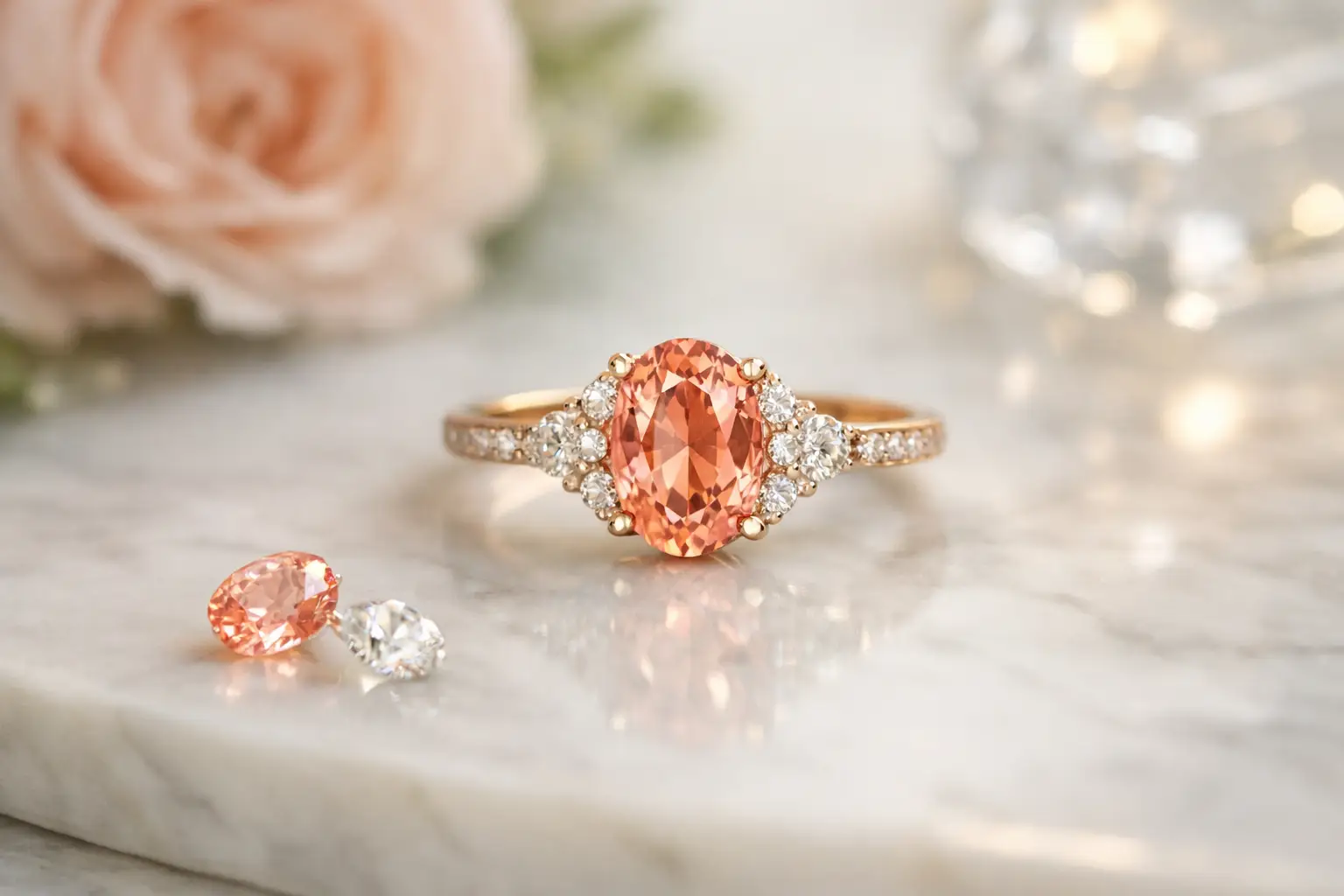
A padparadscha sapphire engagement ring is chosen first with the eye. Its appeal is not a single standardized shade, but the delicate meeting of pink and orange that gives the stone its celebrated lotus-blossom character. Some stones lean softly peach, others carry a more vivid salmon-orange center, and the finest examples hold both colors in balance without appearing brown, overly purple, or washed out.
For couples drawn to a gemstone with warmth, rarity, and a story of natural formation, padparadscha offers something diamonds and more familiar blue sapphires cannot: genuine individuality. Selecting one well requires more than falling in love with a photograph. Color, treatment, cutting, durability, and the honesty of its documentation all deserve close attention.
What Makes Padparadscha So Distinctive?
Padparadscha is a variety of sapphire, part of the corundum family, and shares sapphire’s excellent hardness of 9 on the Mohs scale. That makes it a practical choice for an engagement ring intended for regular wear, provided the ring is thoughtfully designed and cared for.
Its name comes from the Sinhalese word often associated with the color of a lotus flower. In the trade, however, defining padparadscha can be nuanced. The most widely respected stones show a harmonious blend of pink and orange. A sapphire that is simply pink with a faint orange flash, or orange with a trace of pink, may be beautiful but may not meet every laboratory’s or dealer’s definition of padparadscha.
This is why two stones described using the same name can look surprisingly different. There is room for personal preference, but clear disclosure is essential. Ask to see the gemstone in varied lighting and understand how its color has been described by an independent laboratory when a report is available.
The appeal of natural variation
Unlike a calibrated diamond, padparadscha sapphires are not meant to look identical. Their charm often lies in subtle distinctions: a blush of pink near the crown, a sunset-orange body color, or a slight shift from daylight to warmer indoor light. These shifts should feel appealing rather than dramatic enough to make the stone seem like a different gem.
Sri Lanka, historically known as Ceylon, is among the most important and admired sources of padparadscha sapphires. Its gem gravels have produced exceptional stones for centuries, including gems with the soft, luminous color balance many collectors seek. Stones can also be found in other locations, and origin alone should not replace an assessment of beauty and quality. Still, a natural Ceylon sapphire with reliable provenance carries a meaningful connection to a longstanding gemstone heritage.
Choosing a Padparadscha Sapphire Engagement Ring
Color should lead the decision. Look at the stone against a neutral background and, where possible, in daylight near a window. The most desirable color is generally lively and balanced, with enough saturation to read clearly from a normal viewing distance. Pale stones can be graceful and romantic, while stronger stones can feel more vivid and contemporary. Neither is automatically better. It depends on the wearer’s taste and the setting being considered.
A stone that appears brownish, grayish, or overly dark may be less appealing, especially once mounted. Yet a touch of secondary color is not always a flaw. Natural sapphires rarely conform to a single imagined ideal, and a slightly peachier or rosier stone can be the one that feels most personal.
Cut is equally important. Padparadscha rough is rare, so cutters often make careful compromises to preserve carat weight and color. This can result in cushions, ovals, and elongated shapes that retain more of the original crystal than a tightly standardized cut would allow. Look for a stone with even light return, an appealing outline, and no obvious dark center when viewed face up. A window – a transparent area through the middle where light passes straight through – can make a gemstone appear less lively.
Clarity should be judged with realism. Natural sapphires commonly contain fine inclusions, sometimes called silk, crystals, or fingerprints. These internal features can support confidence in natural origin and often have little effect on beauty when they are not immediately visible to the unaided eye. A completely clean-looking stone may be available, but rarity, size, color, and clarity all influence price. It is often wiser to prioritize exceptional color and a pleasing cut over microscopic perfection.
Size, shape, and finger coverage
Carat weight does not tell the whole story. Two padparadscha sapphires of the same weight may look quite different in size because of their shape and depth. An oval can create elegant length on the finger, while a cushion often emphasizes the softness of the gem’s color. A round stone is classic but less common, partly because cutting a round may sacrifice more rough.
Try viewing proportions rather than focusing only on carats. A well-cut 1.2-carat oval may have more visual presence than a deep 1.6-carat cushion. Your jeweler can help compare millimeter dimensions and create a setting that gives the stone presence without making it feel exposed.
Treatment, Reports, and Transparent Buying
Treatment is one of the most important conversations when purchasing a padparadscha sapphire. Heat treatment is common in the sapphire market and can improve color or clarity. It is not inherently negative when disclosed accurately, and a heated stone can be an excellent choice for an engagement ring.
Unheated padparadscha sapphires are considerably rarer, particularly when they have attractive color and good clarity. Their scarcity can carry a substantial price premium. For some buyers, the natural, untreated state is central to the stone’s meaning. For others, a beautiful heated sapphire offers better value and allows more budget for size or setting. The right choice is the one made with clear information rather than assumptions.
More intensive treatments require particular care. Beryllium diffusion can introduce or intensify orange color near a sapphire’s surface, and fracture filling may affect durability and long-term care. These treatments should be disclosed, as they influence value, servicing, and how confidently the ring can be worn over decades.
For a significant stone, an independent laboratory report is valuable. Depending on the laboratory and the individual gem, a report may address whether the sapphire is natural, whether evidence of heating is present, and sometimes its geographic origin. Reports have limits: they are expert opinions based on the evidence available in that particular stone. Even so, they form an important part of a transparent purchase alongside clear photographs, treatment disclosure, and an opportunity to ask considered questions.
At Ceyloe, the focus is on helping clients understand the individual gemstone in front of them, including its natural origin, treatment status, and the qualities that make it distinctive.
Settings That Let the Color Speak
Padparadscha works beautifully in yellow gold, rose gold, platinum, and white gold, but each metal changes the impression of color. Yellow gold can draw out the gem’s orange warmth. Rose gold can create a soft, tonal harmony, although it may make a delicate pink-orange stone appear slightly pinker. Platinum and white gold offer clean contrast and can make a more saturated padparadscha stand out sharply.
A solitaire is often the most confident choice because it lets the sapphire remain the focal point. A low-profile bezel offers excellent protection and a modern, understated look, while prongs allow more light into the stone and can make its outline feel lighter. For an active lifestyle, consider a setting with a lower profile and secure, well-made prongs rather than choosing height simply for drama.
Diamond accents can add brilliance without competing with the center stone. Fine white diamond side stones create contrast, while tapered baguettes lend a tailored, architectural finish. A halo can increase visual scale, though it is best kept delicate around a padparadscha whose color is naturally subtle. The setting should frame the sapphire, not ask it to fight for attention.
Caring for a Ring Meant to Be Worn
Sapphire is durable, but durability is not invincibility. Remove the ring for weight training, gardening, and tasks involving hard knocks. Have prongs and settings checked periodically, particularly after an impact. Warm water, mild soap, and a soft brush are generally suitable for cleaning an untreated or conventionally heated sapphire, but a jeweler should advise on the care of any stone with less common treatments or inclusions that require caution.
A padparadscha sapphire is not a substitute for a diamond, nor should it be chosen as one. It is a rare natural gemstone with its own spectrum of color, its own inclusions, and its own relationship to light. The most lasting choice is the stone whose pink-orange balance continues to feel like yours each time you look at it.
Comments (4)