
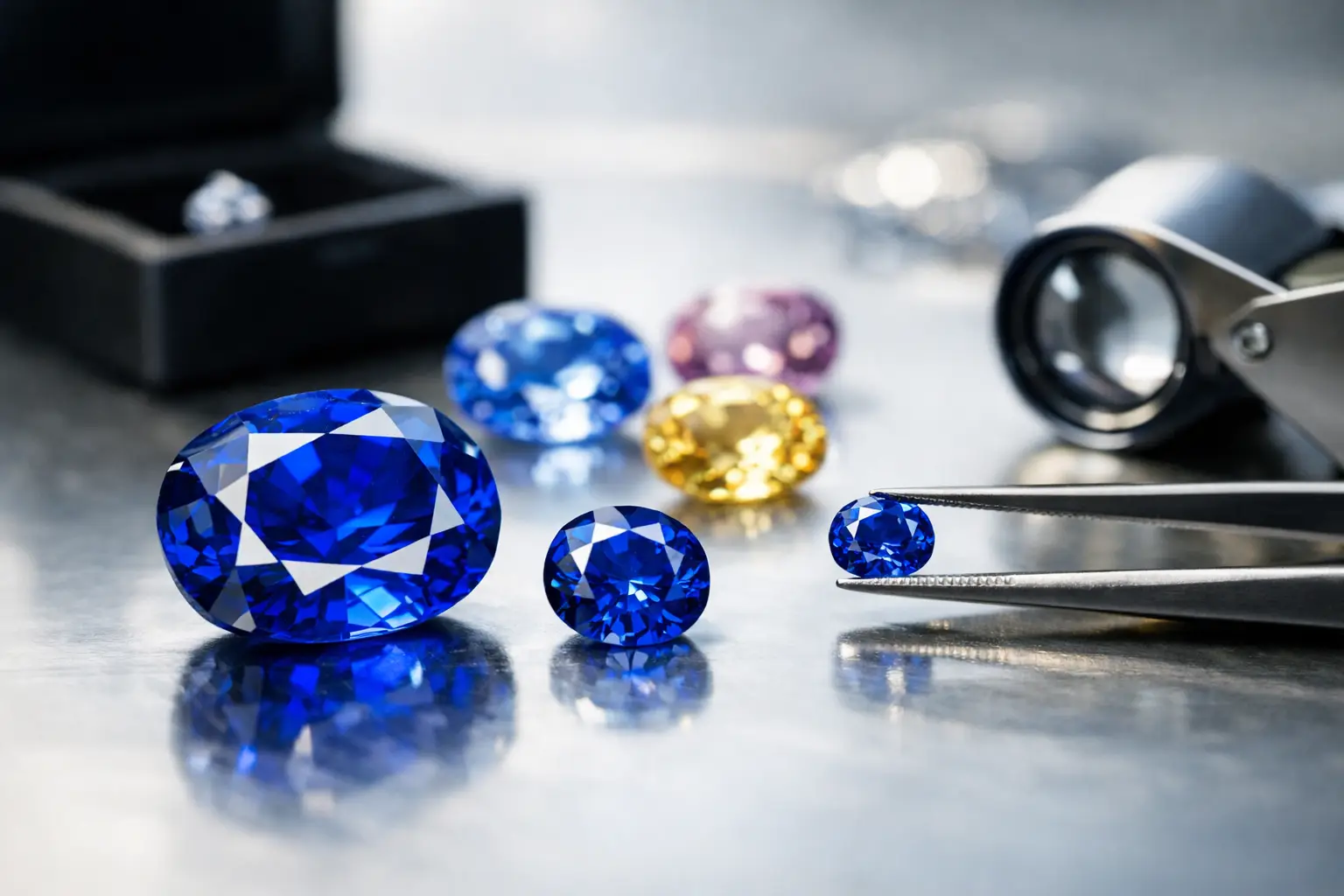
A sapphire’s price can range from a few hundred dollars to many thousands per carat, even when two stones appear similarly blue at first glance. So, why are some sapphires expensive? The answer lies in a rare combination of natural beauty, scarcity, and the quality of what happened beneath the earth long before the stone was cut.
For someone choosing an engagement stone, a future heirloom, or a gemstone simply because its color feels personal, price should not be treated as a shortcut for beauty. A more expensive sapphire is not automatically the right sapphire. But understanding what creates value helps you recognize when a stone is genuinely exceptional and when its price reflects qualities worth considering.
Why Are Some Sapphires Expensive?
Sapphires are valued through a balance of color, clarity, cut, carat weight, origin, and treatment history. Unlike diamonds, where standardized grading is more familiar to buyers, colored gemstones are highly individual. Two sapphires of the same weight can differ dramatically in value because their colors, inclusions, proportions, and natural histories are different.
The finest examples combine a rich, appealing color with brightness, good transparency, an attractive cut, and a credible origin or treatment status. When several of these qualities occur together in one natural stone, the sapphire becomes much rarer. Rarity is what moves a beautiful sapphire into a higher price category.
Color is usually the first value driver
Color has the greatest influence on a sapphire’s value. Buyers often think first of blue sapphire, but sapphire occurs in an extraordinary spectrum: cornflower blue, deep royal blue, soft pastel blue, vivid yellow, pink, green, teal, white, bi-color, and the delicate pink-orange of padparadscha.
For blue sapphires, the most prized colors generally show an appealing balance of hue, tone, and saturation. Hue is the basic color we see, such as blue with a slight violet influence. Tone refers to how light or dark the stone is, while saturation describes the strength or purity of the color.
A highly valued blue sapphire is often neither too pale nor so dark that it appears inky indoors. It has a lively, even color that remains beautiful in different lighting. A stone with strong blue color and good brightness is much harder to find than one that is overly dark, grayish, or noticeably uneven in color.
The same principle applies to fancy-color sapphires. A vivid, clean yellow may be more valuable than a brownish yellow. A fine pink with brightness and saturation can command a premium. True padparadscha sapphires, with their subtle yet distinct balance of pink and orange, are especially scarce and are valued accordingly.
Natural rarity matters more than a label
Every natural sapphire formed under particular geological conditions. Most crystals do not emerge from the earth with the color, clarity, and size needed for fine jewelry. Many are too included, too dark, too pale, or too irregularly shaped to produce a beautifully proportioned gem.
This is why fine sapphires become significantly more expensive as size increases. A one-carat sapphire with excellent color may be uncommon. Finding the same quality at three, five, or ten carats is far more difficult. The price per carat can rise sharply because the supply does not increase in step with demand.
Shape can also affect value. Rough crystal may yield a larger oval than a round or cushion, for example, and a cutter must decide whether to preserve weight or prioritize the most beautiful face-up appearance. A well-cut stone that looks bright and balanced may weigh less than a poorly cut alternative, yet be more valuable and more pleasing once set.
Origin can add meaning and market value
Sapphires are found in several parts of the world, and each source can produce beautiful material. Sri Lanka, Madagascar, Kashmir, Burma, Australia, and East Africa are among the better-known sapphire-producing regions. Origin alone does not determine quality, but it can influence desirability when supported by the stone’s appearance and, where appropriate, an independent laboratory opinion.
Ceylon sapphires from Sri Lanka are particularly admired for their brightness, graceful blue tones, and long gemstone heritage. Sri Lanka has supplied sapphires for centuries, and its alluvial deposits are known for producing a broad range of colors, including elegant blues, yellows, pinks, and padparadscha sapphires.
A sapphire described as Ceylon should not be assumed to be superior simply because of its origin. There are modest and exceptional stones from every producing region. However, an outstanding natural sapphire with a sought-after Sri Lankan origin can carry a meaningful premium because the combination of quality, provenance, and limited supply is genuinely compelling.
For collectors, provenance can be part of the stone’s story. For an engagement ring buyer, it may offer a personal connection to craftsmanship, heritage, or a preference for a natural gemstone with a more traceable journey.
Treatment status has a major effect on price
Most sapphires on the market have been heated. Heat treatment is an accepted and longstanding practice that can improve color and clarity, and it does not make a sapphire artificial. A heated sapphire is still a natural sapphire. It may also be an excellent choice for someone who wants beautiful color at a more accessible price.
Unheated sapphires are different because they display their beauty without conventional heat enhancement. Fine unheated stones are considerably rarer, especially when they have strong color, good transparency, and an attractive size. That rarity often brings a substantial premium.
The distinction is not about one category being universally better. It is about what matters to the individual buyer. Some clients are drawn to the scarcity and natural character of an unheated Ceylon sapphire. Others prefer to place more of their budget toward size or color and find a heated stone offers excellent value.
Treatments beyond standard heating require particular care. Diffusion, fracture filling, and certain other enhancements can affect durability, appearance, and long-term value more significantly. Clear disclosure is essential. A trustworthy gemstone description should state whether a stone is natural, whether it has been heated, and any known treatment details.
Clarity should be judged with realism
Sapphires are natural gemstones, and inclusions are part of their formation story. Unlike diamonds, they are not expected to be completely free from internal features. In fact, inclusions can sometimes help a qualified gemologist identify natural origin or distinguish a natural sapphire from a laboratory-grown stone.
What matters most is whether inclusions noticeably reduce the stone’s beauty or durability. A sapphire may contain fine silk, tiny crystals, or wispy fingerprints that are visible under magnification but not distracting to the eye. Such features can be entirely acceptable, particularly when the stone has exceptional color.
A large fracture, prominent dark inclusion, or cloudiness that dulls transparency will usually lower value. The best balance is a sapphire that looks clean and lively when viewed normally, while retaining the character expected of a natural gem.
Cut determines how the sapphire performs in light
A sapphire can have lovely natural color but still look disappointing if it has been cut poorly. Cut controls how light enters and returns from the gem, affecting brilliance, color distribution, and apparent size.
Colored gemstone cutting is more nuanced than cutting for maximum sparkle alone. A cutter may work around an inclusion, retain an exceptional area of color, or preserve precious carat weight from an unusually shaped crystal. These choices can be sensible, but they also create trade-offs.
Look for a sapphire that appears bright across its surface rather than showing a large dark or transparent area in the center, sometimes called a window. Symmetry, pleasing proportions, and a shape that suits the stone’s color all contribute to its appeal. A superior cut can make a sapphire feel alive, while an overly deep or shallow cut can leave it looking smaller or less vibrant than its carat weight suggests.
Certification and trust support a confident purchase
For a significant sapphire purchase, documentation can be valuable. An independent gemological report may confirm that a gemstone is natural and identify detectable treatments and, in some cases, a geographic origin opinion. Reports are especially relevant for unheated sapphires, larger stones, rare colors, or sapphires priced at collector level.
A report is one part of the decision, not the whole decision. Gem laboratories may word origin conclusions differently, and not every beautiful sapphire requires a report to be enjoyed. What matters is transparent communication about the stone’s known characteristics, supported by careful sourcing and informed guidance.
At Ceyloe, that relationship between source and buyer is central to the experience. A sapphire should be described for what it is: its natural origin, color, weight, treatment status, and individual qualities, rather than presented as a generic blue stone with a price attached.
Choosing value for the way you will wear it
The most expensive sapphire may be rare because it is unheated, large, vividly colored, and from a celebrated source. Yet the best choice for you may be a softer blue that feels calming, a teal sapphire with distinctive character, or a heated stone that allows room in the budget for a beautifully made setting.
When comparing sapphires, view them in varied light, ask about treatments, and consider how the stone looks rather than relying only on carat weight. A smaller sapphire with luminous color and excellent cutting can be more memorable than a larger stone that lacks brightness.
The right sapphire is one whose value you understand and whose individuality you continue to notice long after the first moment of admiration. That is where knowledge becomes personal: not in buying the highest price, but in recognizing the rare qualities that make a particular stone yours.
