
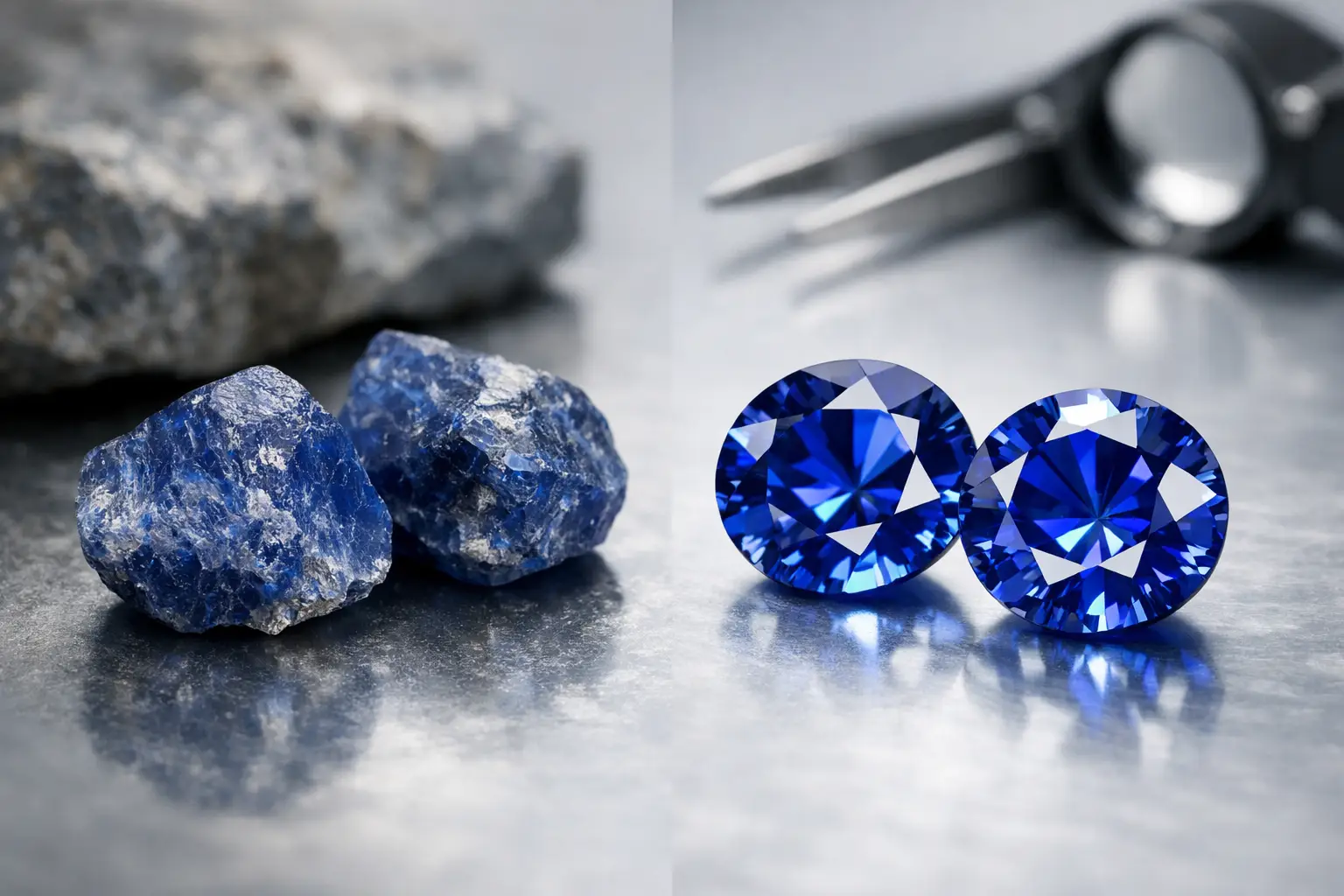
A sapphire can look blue, luminous, and beautifully cut whether it formed beneath the earth over millions of years or grew in a laboratory over a matter of weeks. That visual similarity is why natural sapphire versus lab sapphire is a question worth asking before choosing an engagement stone, a custom piece, or a gemstone to keep for generations. The difference is not about one being real and the other being fake. It is about origin, rarity, character, and the meaning you want your gemstone to carry.
For some buyers, a laboratory-grown sapphire is a sensible way to achieve a larger, clean-looking stone within a defined budget. For others, the appeal lies in a natural sapphire’s individual journey: the geological conditions that created it, its subtle internal features, and, where known, its connection to a place such as Sri Lanka. Neither choice needs to be diminished. A considered purchase begins with clear disclosure and an understanding of what you are comparing.
Natural Sapphire Versus Lab Sapphire: The Essential Difference
Natural sapphires are formed in the earth under extraordinary heat and pressure. They belong to the corundum family, the same mineral family as ruby, and receive their color from trace elements present during formation. A blue sapphire may owe its color to iron and titanium, while pink, yellow, green, white, teal, and padparadscha sapphires each reflect a different balance of nature’s chemistry.
Laboratory-grown sapphires are also corundum. Their chemical composition, crystal structure, and hardness are fundamentally the same as those of natural sapphire. They are created through controlled processes that replicate, in an accelerated way, the conditions in which corundum crystals form. A lab sapphire is not glass, cubic zirconia, or a sapphire imitation. It is a sapphire with a laboratory origin.
The crucial distinction is therefore provenance. One crystal was created by geological processes; the other was grown by people using technology. This origin affects rarity, market value, available sizes, and the story behind the stone, even when both are durable enough for daily wear.
What You Can See, and What You Cannot
At first glance, a well-cut lab sapphire and a well-cut natural sapphire can be difficult to tell apart. Color, brilliance, and proportions influence beauty more immediately than origin does. A laboratory-grown stone may appear especially clean and evenly colored because the growing environment is controlled. Natural sapphires, by contrast, often show fine inclusions or color zoning formed during their long development underground.
These characteristics are not automatically flaws. In a natural gemstone, delicate silk, mineral crystals, fingerprints, or subtle shifts in color can be evidence of natural formation. Their effect on beauty and durability must be assessed individually. Some inclusions are visible and affect transparency; others are microscopic and simply contribute to a gemologist’s understanding of the stone.
Origin cannot reliably be determined with the naked eye alone. Reputable gemological laboratories use magnification and advanced testing to identify natural, laboratory-grown, and treated sapphires. For a significant purchase, a report from an independent laboratory can provide valuable reassurance, particularly for an unheated natural sapphire or a stone represented with a specific geographic origin.
Why Origin Changes Value
A natural sapphire is finite. Every natural stone is the outcome of circumstances that cannot be repeated on demand, which is why exceptional color, clarity, size, and treatment status can command substantial prices. Fine natural Ceylon sapphires from Sri Lanka are especially admired for their brightness, graceful color, and longstanding gemstone heritage.
Laboratory-grown sapphires can be produced in greater quantities and in more predictable sizes. This makes them generally more accessible in price, especially when comparing stones with similar apparent color and clarity. It can also make them practical for designs where size is the priority.
That accessibility comes with a trade-off. Lab sapphires do not usually hold the same rarity-driven value as fine natural stones. Their resale market is less established, and their prices can shift as production methods and supply change. A natural sapphire should not be purchased solely as an investment either, since value depends heavily on quality, documentation, condition, and market demand. Still, a rare natural gem has an enduring scarcity that laboratory production cannot create.
For an heirloom-minded buyer, this distinction can feel meaningful. The value may be financial, but it is also personal: a naturally formed sapphire with known provenance is a singular object, chosen for its own color, character, and history.
Color Is More Nuanced Than “Natural” or “Lab-Grown”
A lab sapphire may offer a vivid, consistent blue that appeals to someone seeking a crisp and highly saturated look. Natural sapphires can also be richly colored, but their beauty is often more nuanced. The finest stones may show a lively balance of blue, violet, or subtle secondary tones rather than a flat, uniform color.
The right color is personal. Some clients are drawn to the airy cornflower blue often associated with Sri Lankan sapphires. Others prefer deep royal blue, a soft pink, a golden yellow, or the shifting blue-green character of teal sapphire. In each case, look at the stone in more than one lighting condition. Daylight, indoor lighting, and evening light can reveal different aspects of a sapphire’s color.
Cut matters just as much. A skillful cut can bring life to a stone, preserve desirable color, and minimize areas that appear too dark or too pale. Carat weight alone says little about visual impact. Two sapphires of the same weight can face up very differently depending on their shape, proportions, and depth.
Treatments and Disclosure Matter
Treatments are a separate consideration from laboratory origin. Many natural sapphires are heated to improve color or clarity, and this is an accepted practice when clearly disclosed. Heating may be simple, or it may involve additional elements and processes. The details matter because treatment can influence rarity and value.
Unheated natural sapphires are comparatively rare, particularly when they also possess strong color and appealing clarity. Their premium reflects that rarity, not merely a label. An unheated stone should be supported by reliable documentation where appropriate.
Lab sapphires may also undergo treatments or be produced to achieve a particular color. The responsible standard is straightforward: sellers should state whether a sapphire is natural or laboratory-grown and disclose any known treatment. Terms such as “created,” “synthetic,” or “lab-grown” should never be used in a way that leaves room for confusion.
A thoughtful seller will also discuss what is not captured by a certificate. A report can confirm identity and, in some cases, treatment and origin opinions. It cannot decide whether the stone’s color moves you, whether its proportions suit your setting, or whether it feels right for the occasion.
Which Sapphire Is Right for You?
A laboratory-grown sapphire may be the right choice if your priority is maximizing size, a clean appearance, or a specific color within a set budget. It offers the durability of corundum, rated 9 on the Mohs scale, making it suitable for rings worn every day. It can be a lovely and intentional choice when its origin is understood from the outset.
A natural sapphire may be right if you value geological rarity, individuality, and a connection to place. This is particularly true for buyers who want a gemstone with provenance, an unheated collector stone, or a center stone whose subtle natural character becomes part of its identity. Natural does not always mean perfect-looking, and that is often the point: each stone asks to be appreciated on its own terms.
Budget should be approached honestly. Rather than comparing only carat weight, consider whether you would prefer a smaller natural sapphire with exceptional life and color, or a larger lab sapphire with a more uniform appearance. Both can become beautiful jewelry. The better choice is the one that aligns with your priorities rather than someone else’s definition of value.
For a natural sapphire, ask about origin where known, treatment status, dimensions, carat weight, and whether an independent laboratory report accompanies the stone. For a lab sapphire, ask for clear confirmation of laboratory origin and any treatment information. In either case, inspect the sapphire in person where possible, or request clear videos and images taken in varied lighting.
At Ceyloe, the focus is on carefully selected natural gemstones and transparent conversations about the qualities that make each one distinct. Choosing a sapphire should feel unhurried. The most meaningful stone is not simply the one that looks impressive on paper, but the one whose origin, character, and beauty continue to feel considered every time you see it.
